
Middle-level LC-MS Analysis of Mutated Antibodies using FabDELLO®
Application
Above hinge digestion at a single lysine residue, producing defined fragments for robust LC-MS analysis of LALA-engineered IgG1 antibodies.

Mutated hinge regions are common modifications of therapeutic antibody candidates to reduce effector functions. The mutations may affect the antibody digestion efficiency of enzymes with high substrate specificity. For example, the highly specific FabRICATOR (IdeS) digestion efficiency is negatively affected on antibodies containing the common LALA mutation.
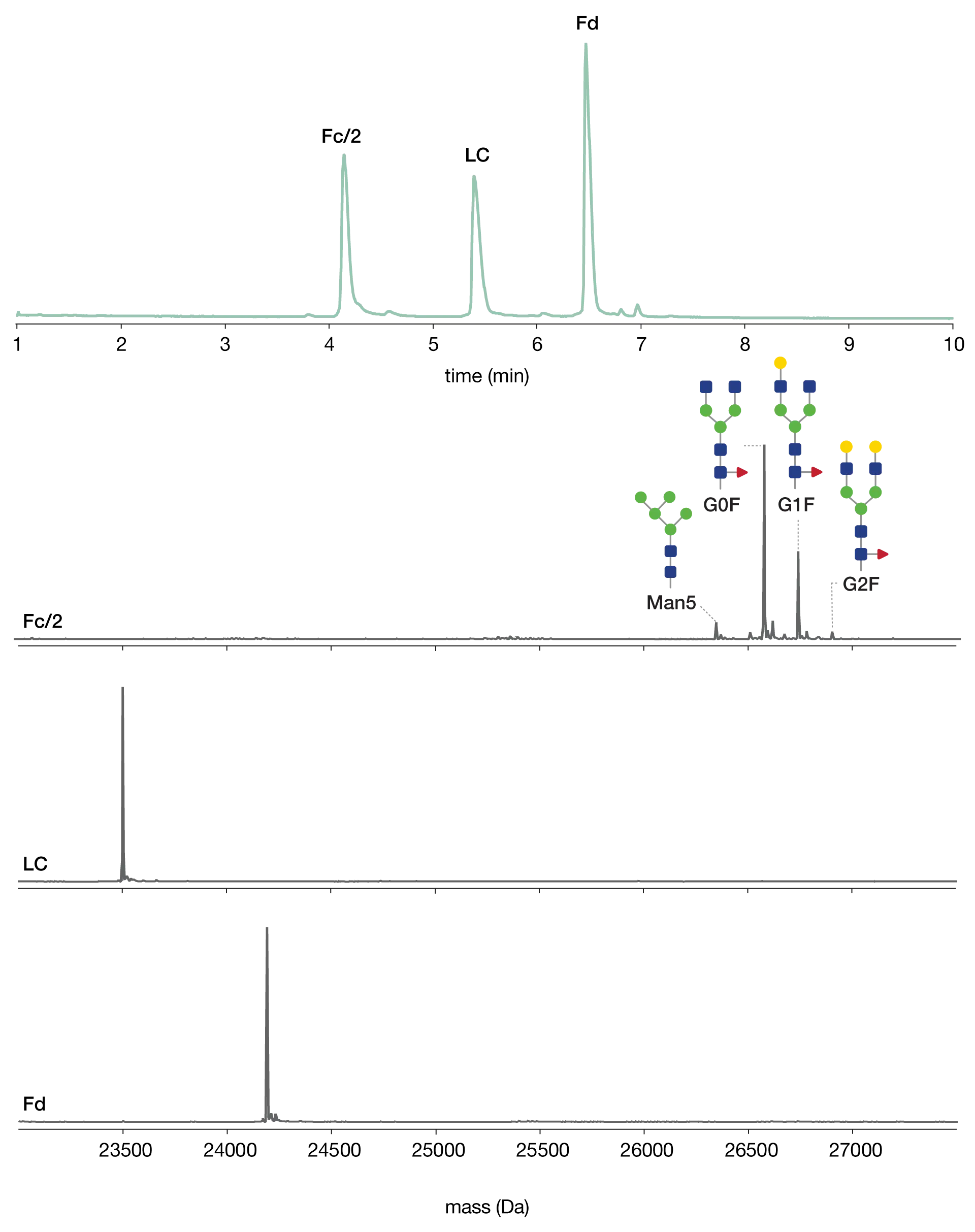
FabDELLO acts at a single exposed lysine residue above the hinge on human IgG1 and enables the popular middle-level LC-MS analysis of antibodies with mutated hinge regions. As an example, the commercially available IgG1 risankizumab, with a LALA mutation in the lower hinge region, was digested with FabDELLO and analyzed by reversed-phase LC-MS.
Efficient above hinge digestion of human IgG1 containing LALA mutation
The digestion resulted in generation of homogenous Fab and Fc fragments, which can be reduced with 20 mM DTT, for middle-level LC-MS analysis. This generated homogenous Fc/2, light chain (LC) and Fd fragments. The defined peaks observed after digestion with FabDELLO show homogenous fragment generation and robust performance of the enzyme.
Enables middle-level LC-MS characterization of hinge mutated human IgG1
Related Products

Resources
FabDELLO®
Download Product Folder

FabDELLO® for the Analysis of Hinge Mutated and Bispecific Antibodies
Download Scientific Poster

FabDELLO® for the Analysis of Bispecific Chain Pairing
Download Scientific Poster


