TrypsINATOR™ LysCERATOR Mix Enhances Digestion Efficiency at K-P Sites
Performance Activity
Improved digestion efficiency at challenging K–P sites compared to TrypsINATOR alone, resulting in more complete digestion with fewer missed cleavages.

Trypsin is known for its limited cleavage capacity at lysine residues followed by proline (K-P sites). For substrates or analyses where efficient cleavage at K-P sites is important, the TrypsINATOR LysCERATOR Mix can overcome this limitation.
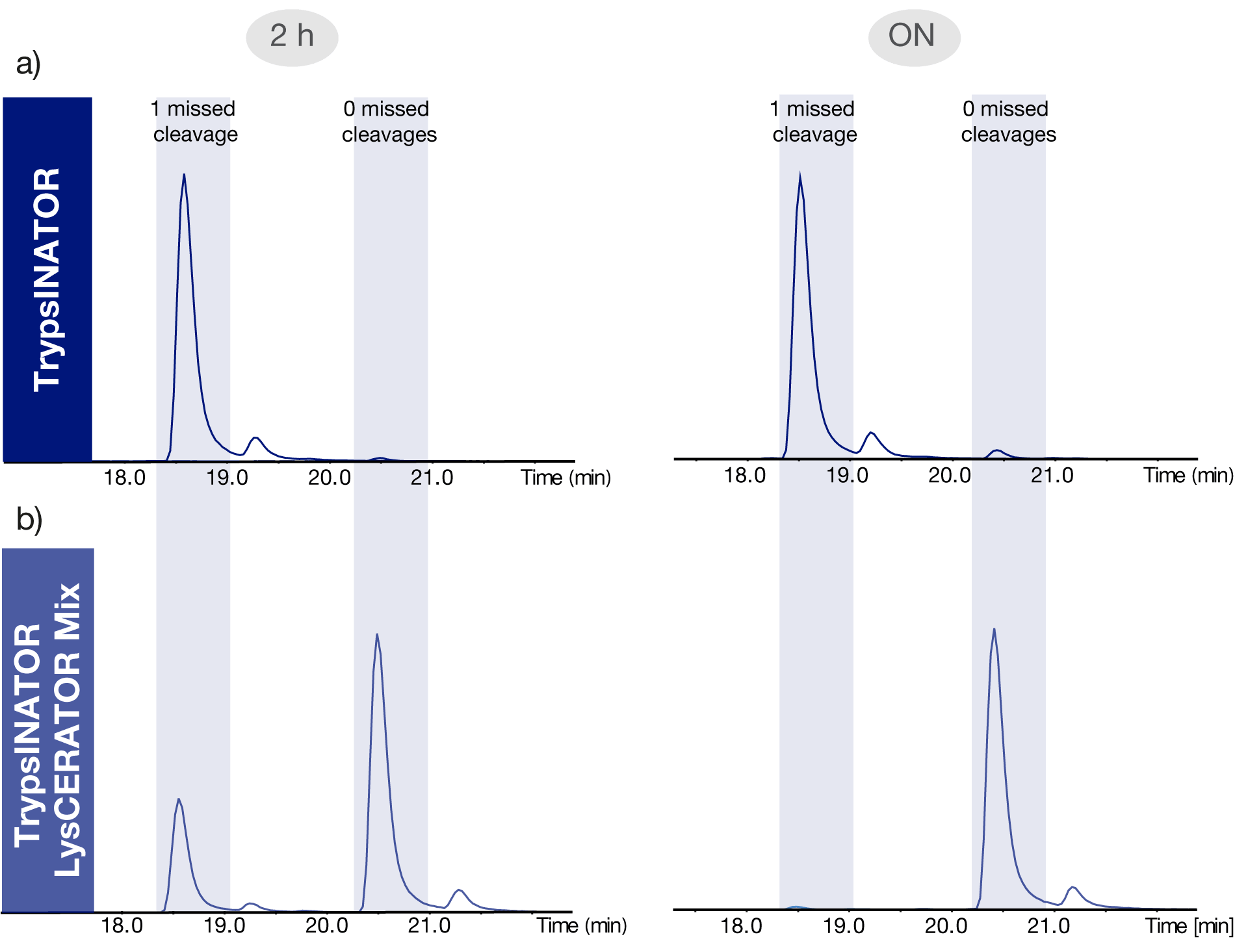
Digestion efficiency at K-P sites was assessed using trastuzumab. Figure 1 shows the relative intensities of two peptides derived from the light chain N-terminus: LC aa 25–39, representing the cleavage at the K-P site, and LC aa 25–42, containing a missed cleavage at the K39/P40 site. After a 2-hour digestion with TrypsINATOR LysCERATOR Mix, the fully cleaved peptide (LC aa 25–39) was by far the more abundant species, in contrast, digestion with TrypsINATOR alone resulted in minimal digestion at the K-P site, even after overnight digestion.
Improved digestion efficiency at K-P sites using TrypsINATOR LysCERATOR Mix
Following overnight digestion with TrypsINATOR LysCERATOR Mix, there was a near-complete digestion at the K-P site (Fig. 1b). Taken together, the data demonstrate that the addition of LysCERATOR can overcome the limited digestion efficiency of TrypsINATOR at K-P sites, and in experiments where digestion at K-P sites is of particular importance, TrypsINATOR LysCERATOR Mix is the preferred option to TrypsINATOR alone.
Fewer missed cleavages resulting in more complete digestion
Related Products
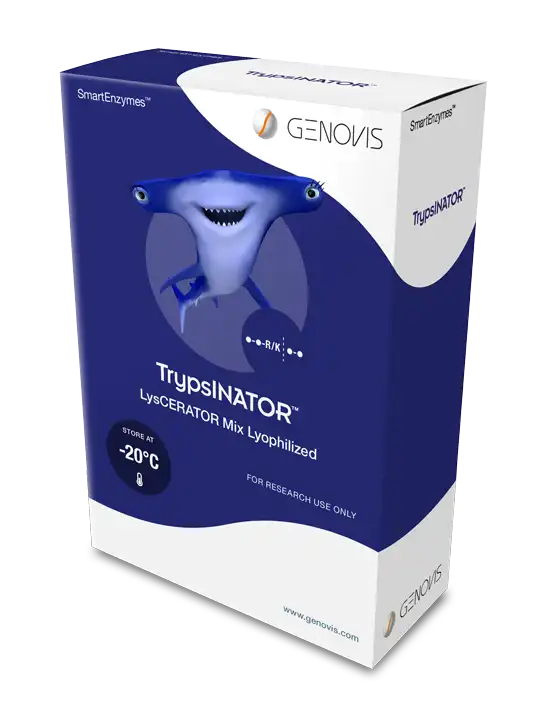
TrypsINATOR™ LysCERATOR Mix Lyophilized
Lyophilized enzyme mix for arginine- and lysine-specific protein digestion

Resources
TrypsINATOR™
Download Product Folder