
Generation of Highly Potent ADCs using GlyCLICK®
Application
Site-specific ADC generation with defined DAR, preserving antigen binding and delivering potent, controlled cytotoxicity in target cells.

Site-specific conjugation at the Fc glycan sites using GlyCLICK preserves the antigen-binding capacity and stability after conjugation. The defined DAR that is obtained enhances controlled cytotoxicity while minimizing instability and off-target effects, otherwise often observed for randomly conjugated ADCs.
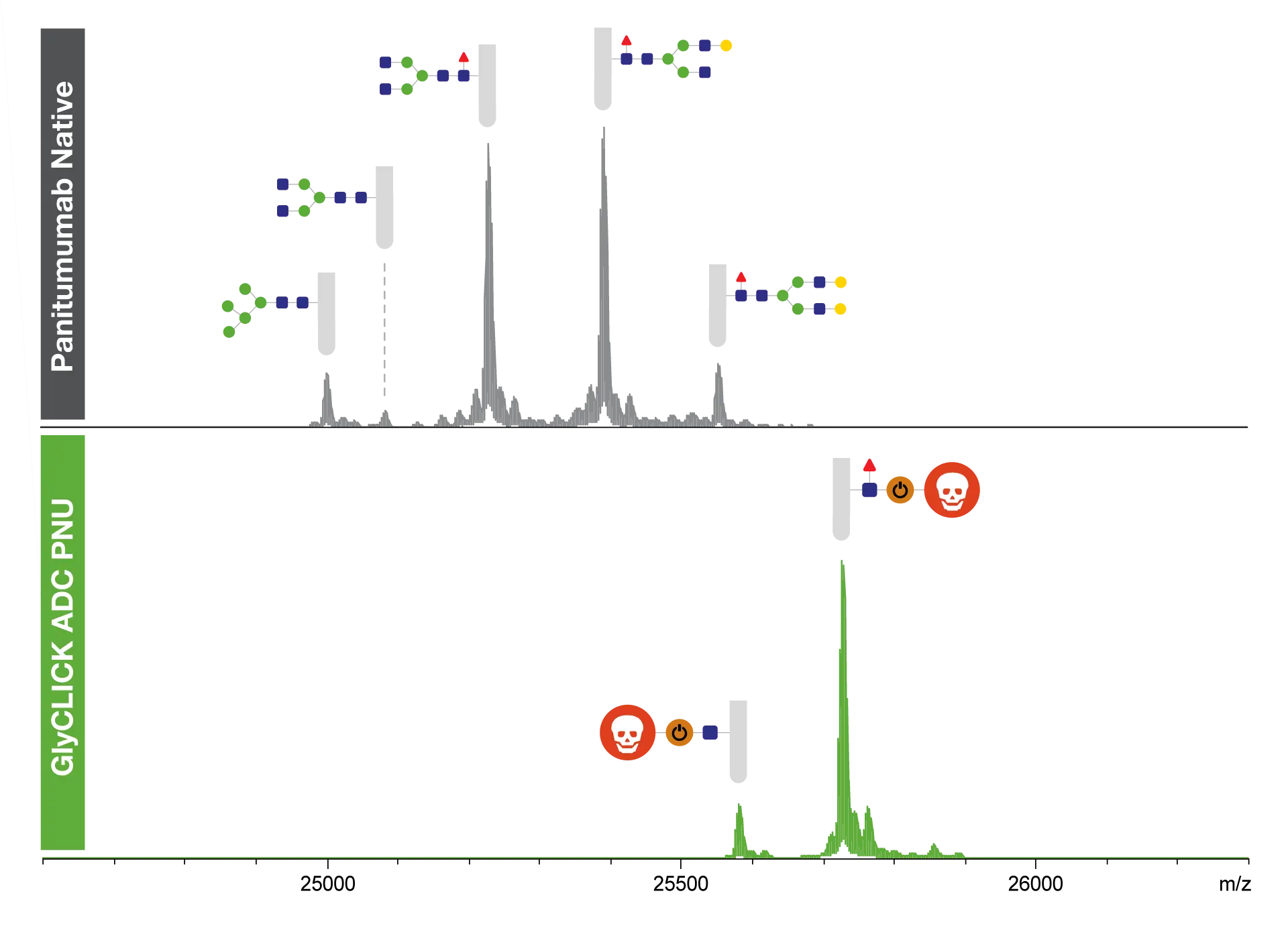
In collaboration with Glykos Finland, we have conjugated the toxin PNU to panitumumab using the GlyCLICK ADC Kit. The PNU-conjugated ADC molecules were digested using FabRICATOR before LC-MS analysis to characterize the scFc domain. The deconvoluted mass spectra confirm complete and efficient deglycosylation with subsequent PNU conjugation using GlyCLICK demonstrating reliable generation of a panitumumab-PNU ADC molecules with a DAR of 2 (Fig.1).
Reliable ADC generation with DAR of 2 using GlyCLICK
Instability in serum and biotransformation events due to poor ADC quality can cause premature drug loss in circulation and affect the conjugates distribution in tissue, potentially limiting dose-response toxicity. To demonstrate the functionality and cytotoxic effect of GlyCLICK conjugated ADCs, SK-BR-3 HER2+ cells were incubated with trastuzumab-PNU ADC molecule. The killing curve shows the in vitro cytotoxic effect on cells with an IC50-value in the pM range, indicating the generation of a functional and potent ADC (Fig 2).
Generation of functional and highly potent ADC molecule
Related Products

Resources
GlyCLICK®
Download Product Folder

GlyCLICK® for Generation of Dual-payload and Bispecific ADCs
Download Scientific Poster

GlyCLICK® for Generation and Analysis of ADCs
Download Scientific Poster
GlyCLICK® for Generation of Improved ADCs
Download Scientific Poster

GlyCLICK®: From Kit to Clinic
Watch video


