GingisKHAN™ Fab Kit
Lyophilized enzyme and affinity resin for above hinge digestion of human IgG1 and purification of Fab fragments


Application
Efficient Fab generation for SPR-based separation of affinity and avidity effects, supporting detailed functional characterization of monoclonal antibodies.

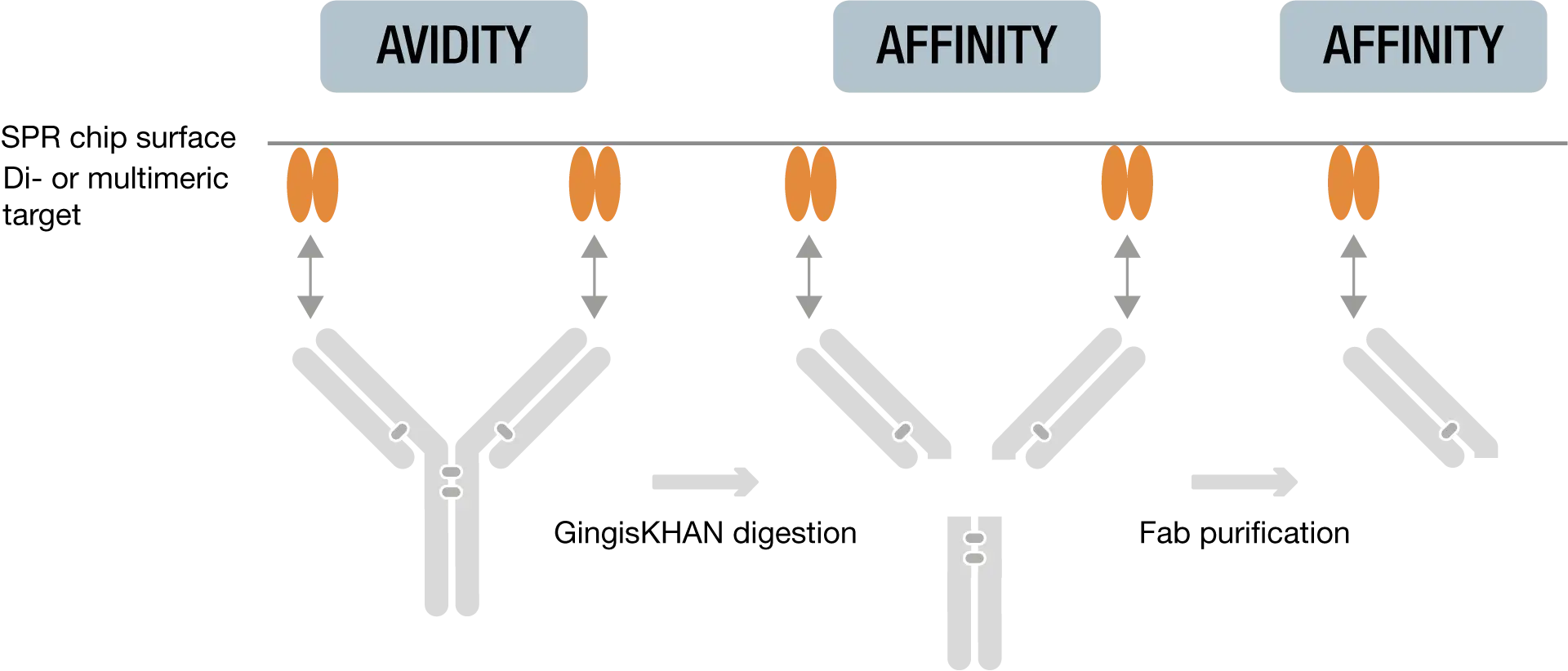
The affinity of an antibody describes the binding strength of the interaction between a single antigen and a single Fab, while avidity is the combined strength of multiple binding affinities. In the functional characterisation of mAbs, it is important to both understand affinity and avidity effects to determine candidate molecules with both optimal binding strength and relevant in vivo activity.
Here, we have a demonstration of how GingisKHAN has been used to produce Fab fragments for the characterization of affinity and avidity effects. In-short, the authors reported an approach for the functional assessment of human IgGs during lead identification with a focus on performing surface plasmon resonance (SPR) to differentiate between affinity and avidity effects of these molecules.
Characterization of affinity vs avidity effects
In this example the authors were able to test the avidity of the mAbs by SPR and then use GingisKHAN to reliably digest the antibody to release the Fab fragments which are then purified to allow affinity strength of each binding site to be determined. This allowed high-throughput kinetic affinity determination using SPR to be performed for human IgG monoclonal antibodies. The above hinge cleavage using GingisKHAN also makes this approach viable for characterization of the distinct Fab regions of bispecific antibodies.
Generation of intact Fab fragments using GingisKHAN
Lyophilized enzyme and affinity resin for above hinge digestion of human IgG1 and purification of Fab fragments
Download Product Folder
