
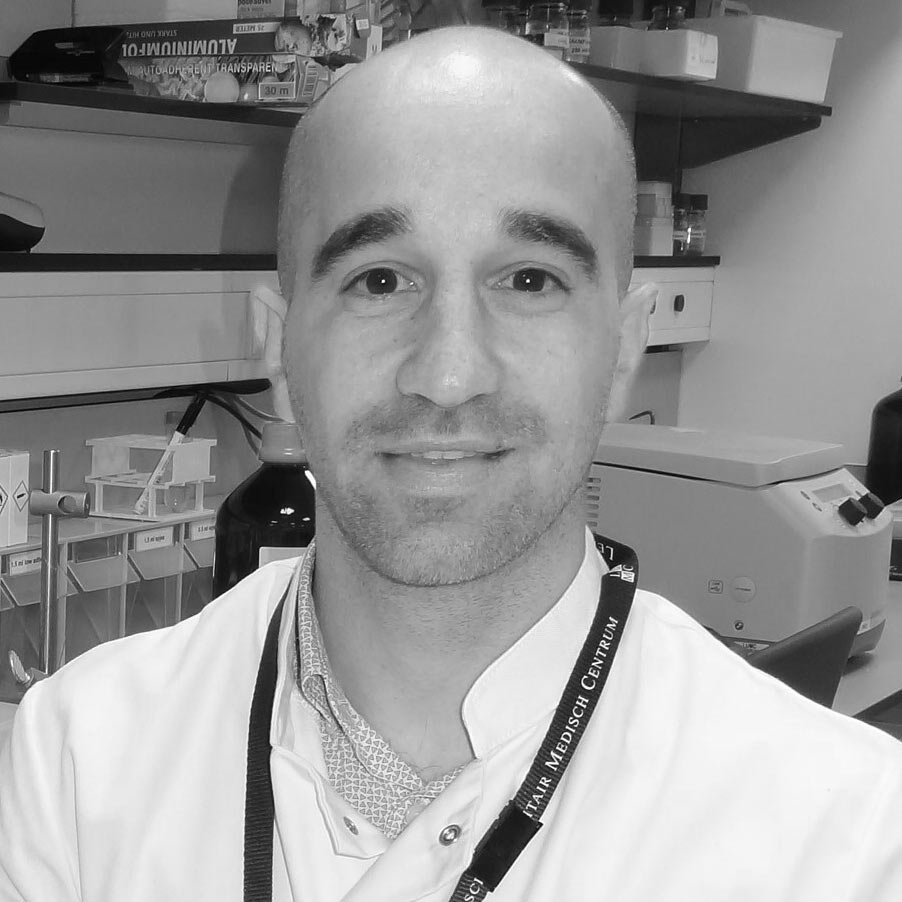
Tell us about yourself?
My work is focused on the development of ultrahigh resolution mass spectrometry-based methods for the analysis of biomolecules such as glycans, peptides, and proteins. This includes the structural characterization of monoclonal antibodies for determination of primary amino acid sequence and post-translational modifications.
What is new in your recent publication?
Our newly developed method combines the advantage of ultrahigh resolution mass measurements with the efficient fragmentation provided by MALDI in-source decay (ISD) using 1,5-diaminonaphthalene as a reducing MALDI matrix. The main advantages are complementary sequence information compared to other mass spectrometric fragmentation techniques and the use of a minimal sample preparation procedure that does not require separation techniques such as liquid chromatography.
What are the advantages of using SmartEnzymes?
The use of FabRICATOR or GingisKHAN allows for increasing sequence information of heavy chains to more internal protein regions. In addition, after digestion, the mAb Fc portion can be analyzed directly by MALDI-MS allowing for the detection of the most abundant Fc glycoforms.
How do you view sample preparation prior to MS analysis?
Liquid chromatography is typically used to separate mAb subunits and remove ESI-non-compatible compounds like salts. Our method is based on MALDI which is known to be more tolerant to salts. Thus, SmartEnzymes combined with MALDI-ISD MS avoids laborious sample preparation steps that can lead to artificial the modification of mAbs. Also, it comes with short analysis times in contrast to other chromatographic techniques.
What are you working on next?
Our attention is now on bispecific mAbs. We apply our MALDI-based method for the simultaneous analysis of all six different polypeptide chains generated after treatment with FabRICATOR and chemical reduction of the disulfide bonds. Our aim is to develop a fast method for the monitoring of chemically induced mAb modifications.