LysCERATOR™ Retains High Activity Under Strong Denaturing Conditions
Performance Activity
High efficiency and peptide coverage maintained in strong denaturants, supporting analysis of highly structured and aggregation-prone proteins.

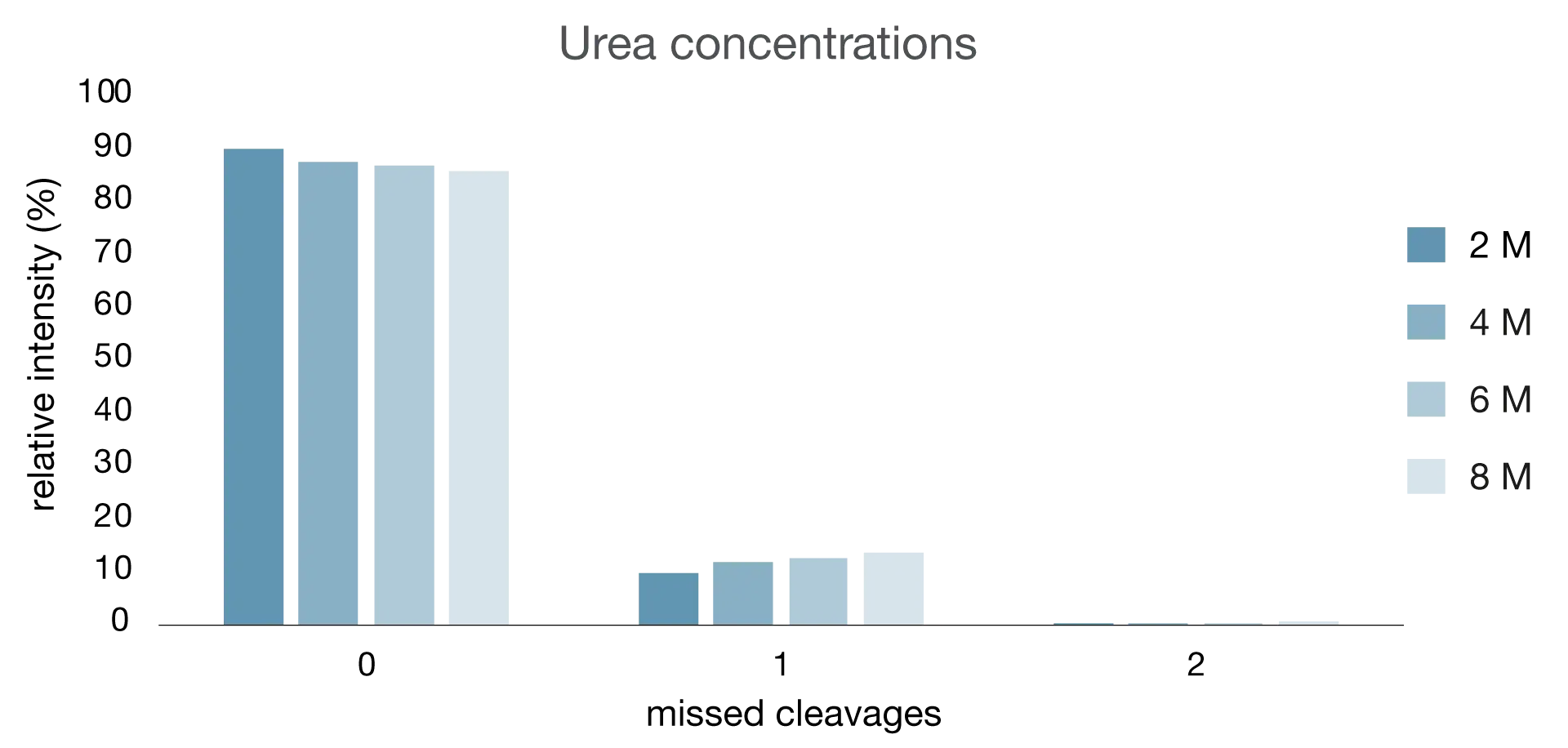
Efficient proteolytic digestion generally requires denaturation of the target protein to fully expose potential cleavage sites. However, some proteins are highly structured, or aggregation-prone, and, therefore, may require high concentrations of denaturing agents to render the protein backbone accessible for enzymatic digestion. To evaluate the robustness of LysCERATOR under such challenging conditions, its digestion performance was assessed in the presence of increasing concentrations of commonly used denaturants.
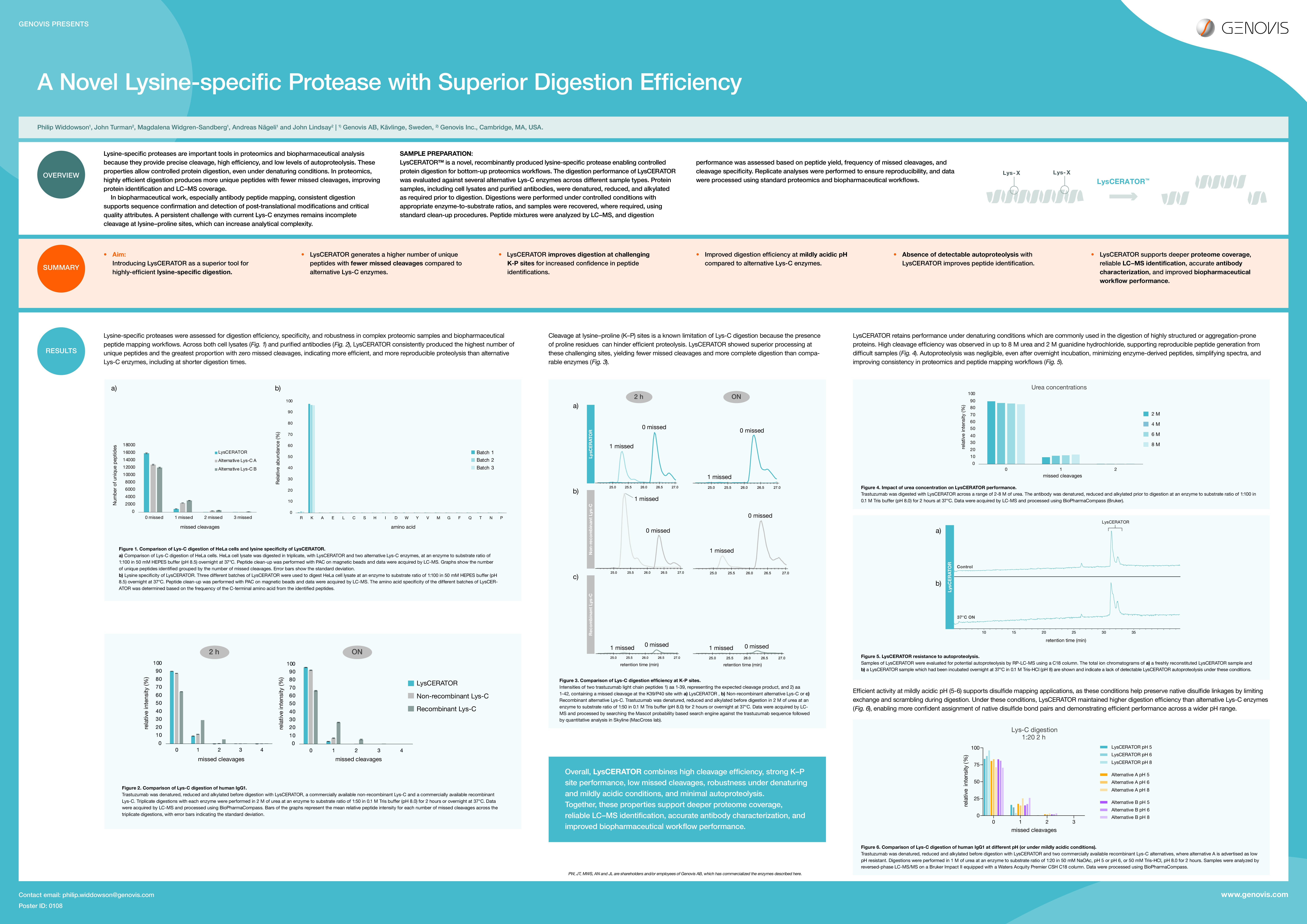
Trastuzumab was digested with LysCERATOR across a range of urea concentrations, and digestion efficiency was largely preserved between 2–8 M urea. After 2 hours digestion at 37°C, the relative intensity of peptides with zero missed cleavages remained high, decreasing only slightly from 90% at 2 M urea to 86% at 8 M urea, with little impact on overall peptide intensity. This indicates that even a high concentration of urea has minimal impact on LysCERATOR performance.
LysCERATOR exhibits a high tolerance to strongly denaturing conditions
Activity retained in up to 8 M urea and 2 M Gd-HCl
The performance of LysCERATOR was also evaluated in the presence of guanidine hydrochloride (Gd-HCl). Efficient digestion was maintained between 1–2 M Gd-HCl, with the relative intensity of peptides with zero missed cleavages remaining around 90% after 2 hours at 37°C (data not shown). At higher denaturant strength (4 M Gd-HCl), the proportion of peptides with zero missed cleavages decreased to 68%, reflecting reduced digestion efficiency consistent with partial inhibition of enzymatic activity under these conditions.
Together, these results demonstrate that LysCERATOR exhibits a high tolerance to a strong denaturing environment when using urea, and moderate concentrations of Gd-HCl. This robustness highlights its suitability for proteomic analysis of proteins that are difficult to denature, where strongly denaturing concentrations are required to achieve comprehensive and reproducible digestion.
Robust and efficient digestion of demanding samples
Related Products
Resources
LysCERATOR™
Download Product Folder

Private: LysCERATOR™ for Superior Lysine-specific Digestion
Download Scientific Poster