LysCERATOR™ is Highly Resistant to Autoproteolysis
Performance Activity
Consistent proteolytic activity delivered with no detectable autoproteolysis, enabling cleaner LC–MS data and more confident peptide identification.

A low level of autoproteolysis is an important quality attribute of proteolytic enzymes used for peptide mapping of antibody candidates in drug development. Autoproteolysis – self-digestion of the enzyme – can negatively affect analytical performance in two important ways. Firstly, it may reduce the effective enzyme activity during longer digestion times, leading to incomplete digestion and increased variability. Secondly, peptides generated from enzyme self-cleavage can co-elute with analyte-derived peptides and introduce contaminating signals during LC–MS analyses, complicating peak assignment and increasing the risk of misidentification. This added ambiguity is particularly problematic in peptide mapping workflows, where confident sequence confirmation and precise localization of post-translational modifications are essential for defining critical quality attributes (CQAs).
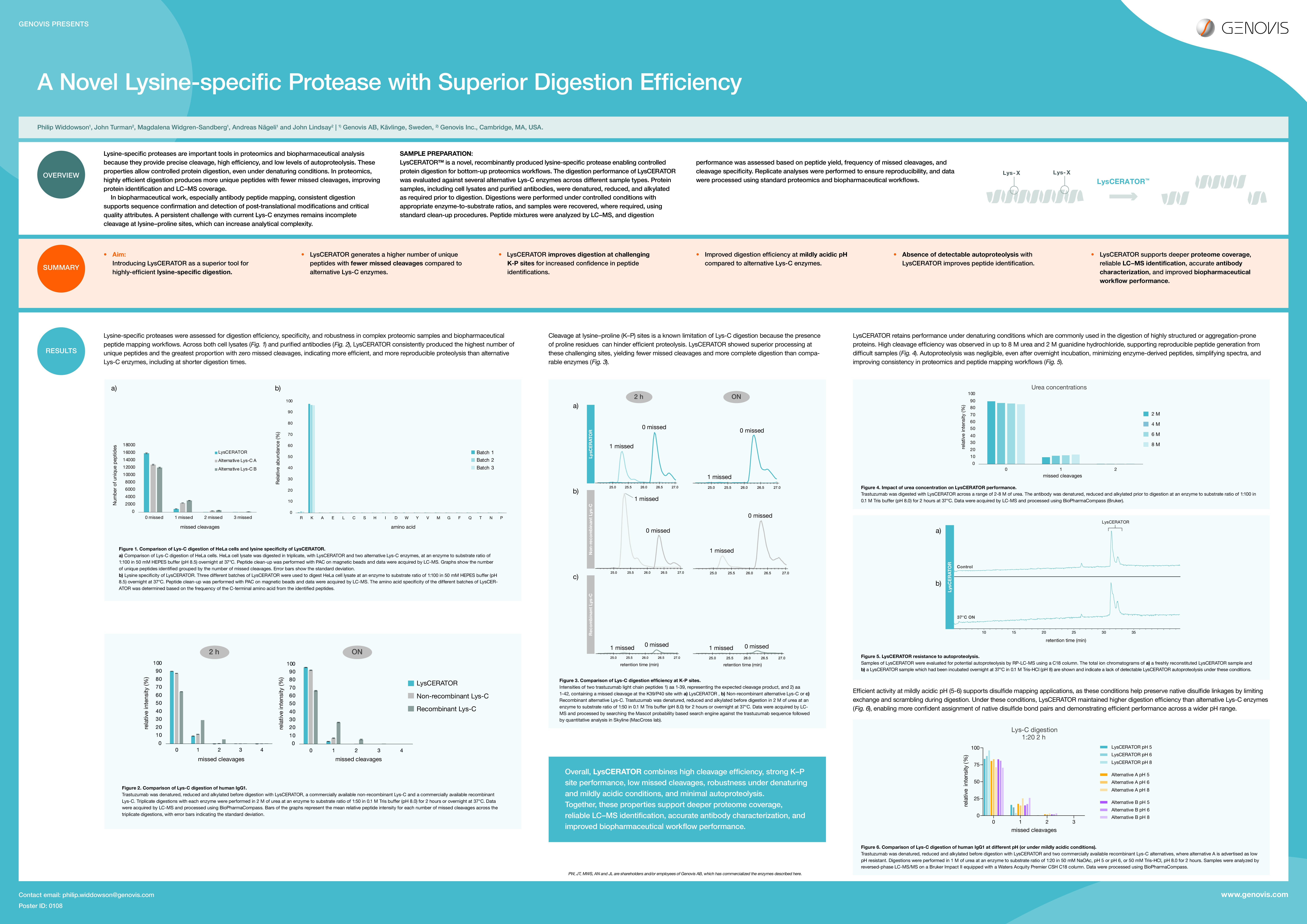
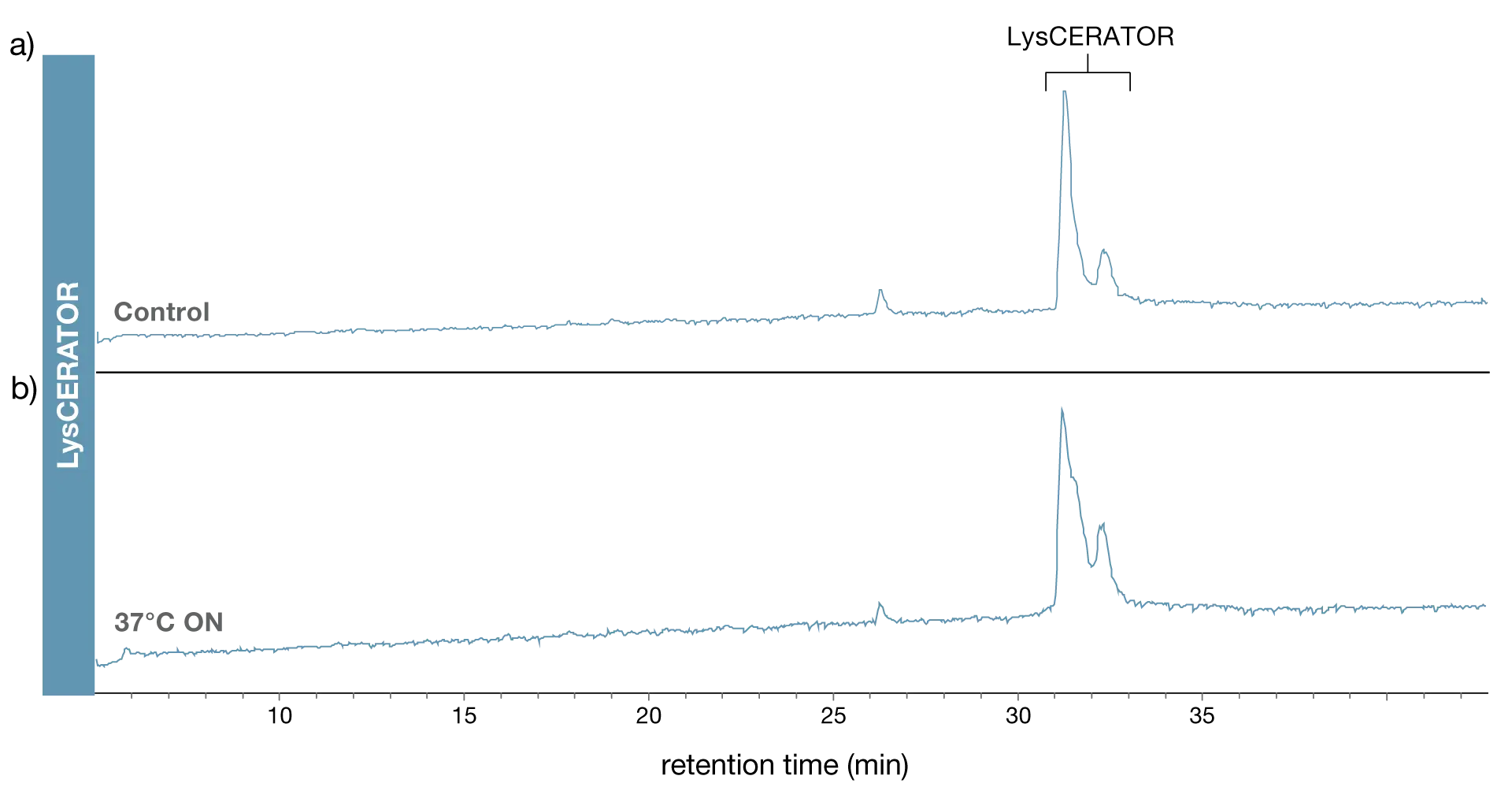
To investigate potential autoproteolytic tendencies of LysCERATOR, the enzyme was incubated overnight in reaction buffer (0.1 M Tris-HCl, pH 8.0) at 37°C and analyzed by RP-LC–MS. A freshly prepared enzyme sample was analyzed in parallel as a control. No generation of LysCERATOR peptides was observed following incubation of the enzyme alone, compared to the control, consistent with very low or undetectable levels of LysCERATOR autoproteolysis under these conditions.
Low levels of enzyme autoproteolysis improves peptide identification
The absence of detectable autoproteolysis demonstrates the effectiveness of LysCERATOR for peptide mapping applications, particularly for extended or overnight digestions commonly used in antibody characterization. By minimizing enzyme-derived background signals and maintaining consistent proteolytic activity, low levels of autoproteolysis contribute to cleaner mass spectra, more confident peptide identification, and improved robustness of peptide mapping methods throughout antibody drug development.
Absence of detectable autoproteolysis in LysCERATOR reaction buffer
Related Products

Resources
LysCERATOR™
Download Product Folder

Private: LysCERATOR™ for Superior Lysine-specific Digestion
Download Scientific Poster