Improved Digestion Efficiency of LysCERATOR™ on hIgG1
Application
Efficient peptide mapping of antibodies with minimal missed cleavages and high sequence coverage for confident PTM identification.

High digestion efficiency is critical for reliable peptide mapping of antibody candidates in drug development. Peptide mapping is routinely used to confirm primary sequence, identify post-translational modifications (PTMs), and monitor product quality throughout development and manufacturing. Incomplete or inconsistent proteolytic digestion leads to missed cleavages, which increase sample complexity, reduce sequence coverage, and complicate data interpretation. This can obscure critical quality attributes (CQAs), reduce confidence in PTM identification and localization, and negatively impact comparability studies and regulatory submissions.
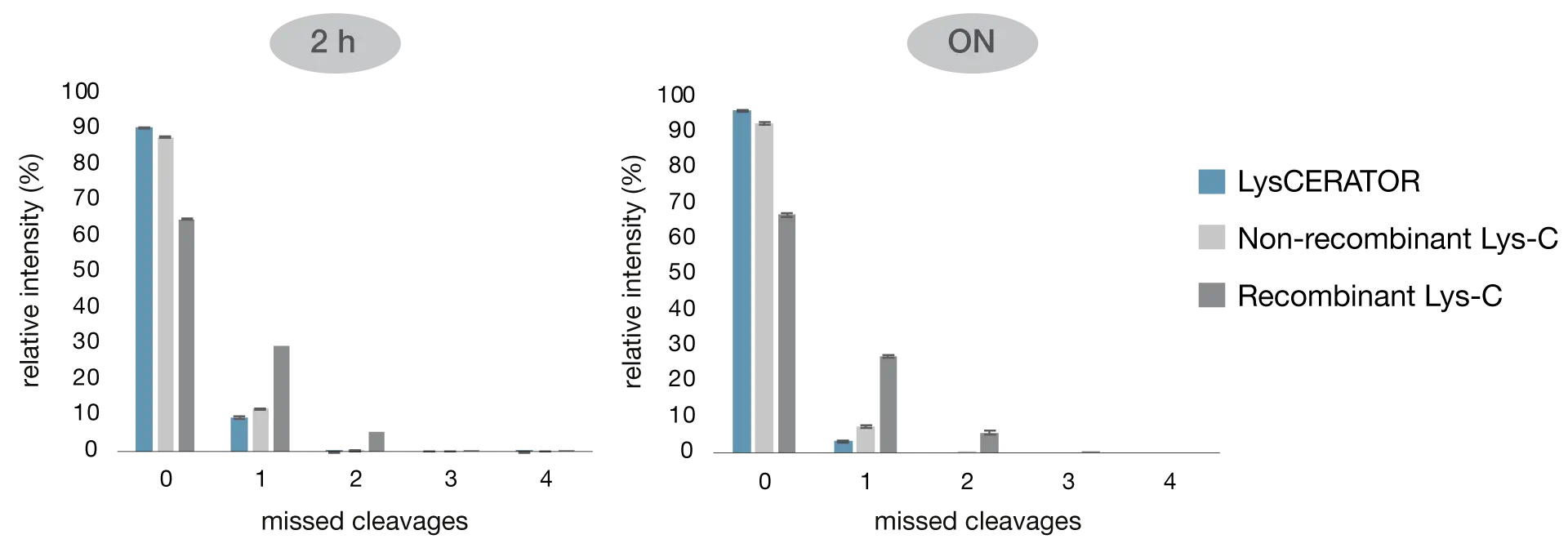
To evaluate the performance of LysCERATOR for peptide mapping of antibody candidates, the human IgG1 trastuzumab was digested using LysCERATOR and two alternative, commercially available Lys-C enzymes – one non-recombinant and one recombinant (Fig. 1). Following a 2-hour digestion, LysCERATOR achieved superior cleavage efficiency, with 91% of total peptide intensity corresponding to peptides with zero missed cleavages, compared to 88% for the non-recombinant Lys-C and 65% for the recombinant Lys-C. Following overnight digestion, the proportion of peptides with zero missed cleavages increased to 97% for LysCERATOR and 93% for the non-recombinant Lys-C, while remaining substantially lower at 67% for the recombinant alternative Lys-C.
Superior digestion efficiency of hIgG1 compared to alternative Lys-C’s
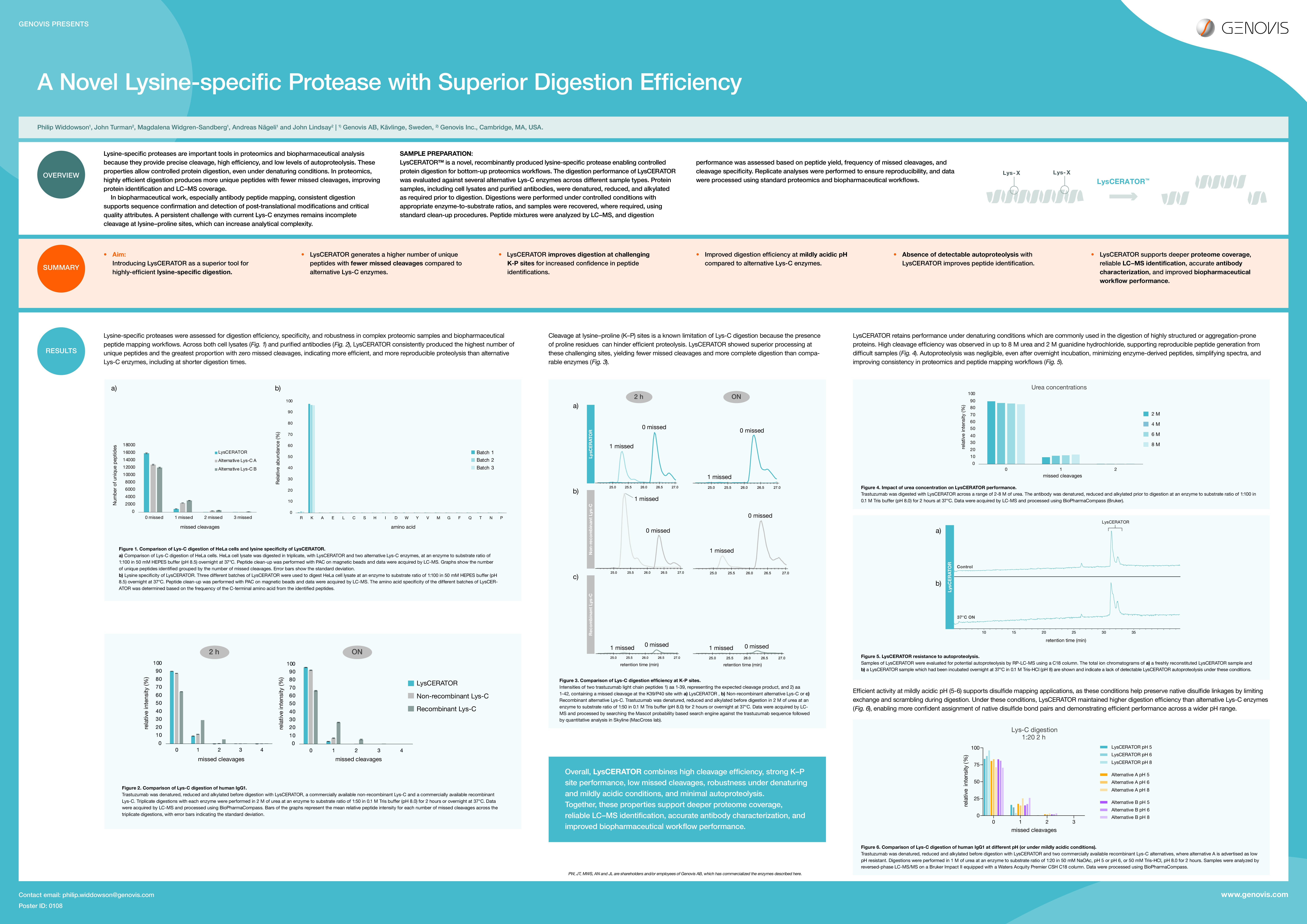
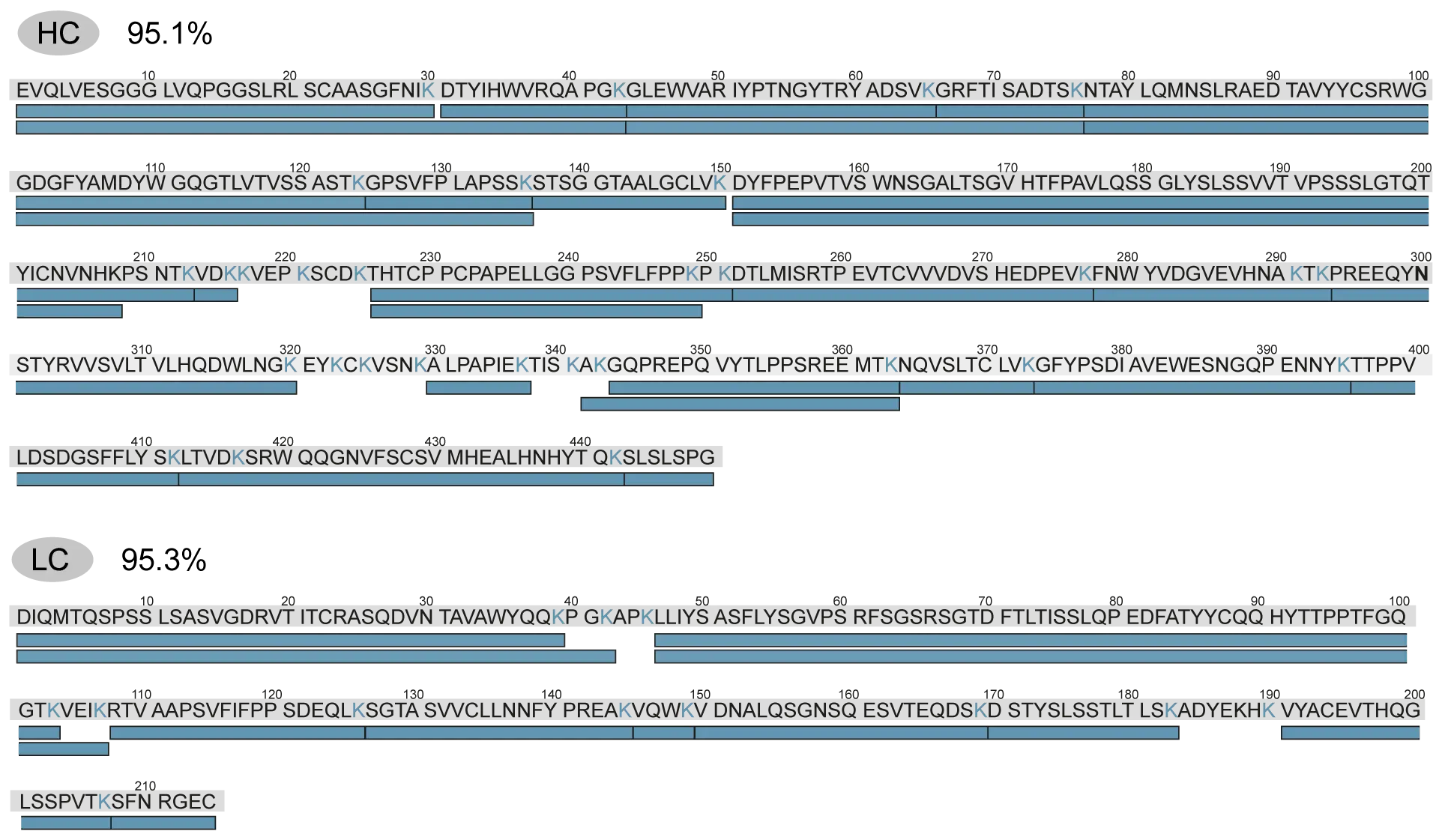
These results highlight the superior digestion efficiency of LysCERATOR for peptide mapping workflows compared to other commercially available products. Efficient digestion, with minimal missed cleavages, even at relatively short digestion times, enables faster turnaround without compromising data quality. This is particularly valuable in high-throughput analytical environments and early-stage development, where speed and reproducibility are essential. To further demonstrate the utility of LysCERATOR for peptide mapping, trastuzumab sequence coverage was assessed (Fig. 2). After 2 hours, sequence coverage reached 95.1% for the heavy chain and 95.3% for the light chain. High sequence coverage increases confidence in the detection and quantification of post-translational modifications when using LysCERATOR, which is critical during the comprehensive characterization of antibody therapeutics.
High sequence coverage increases confidence in peptide mapping workflowsLonger peptides simplifies peptide mapping data interpretation
Related Products
Resources
LysCERATOR™
Download Product Folder

Private: LysCERATOR™ for Superior Lysine-specific Digestion
Download Scientific Poster