Superior Digestion Efficiency of LysCERATOR™ on HeLa Cell Lysates
Application
Superior digestion efficiency with high lysine specificity, generating more unique peptides for confident protein identification in complex proteomics workflows.

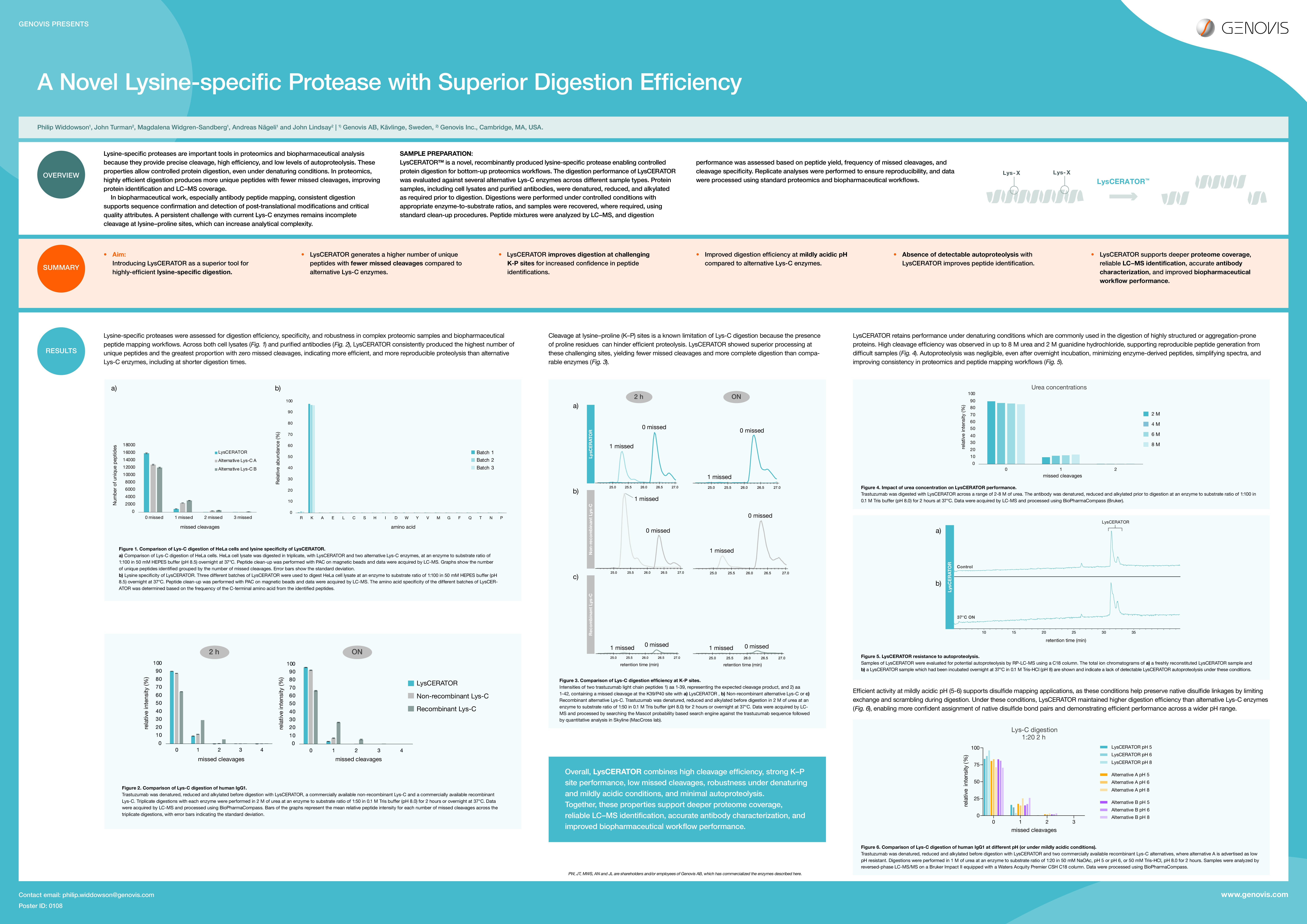
In proteomics applications, the choice of proteolytic enzyme is critical for achieving confident protein identification and comprehensive proteome coverage. High enzymatic efficiency is essential to digest complex protein mixtures into peptides suitable for LC–MS analysis. This increases peptide yield, improves sequence coverage, and enhances the likelihood of identifying low-abundance proteins. In this context, a high number of unique peptides – particularly peptides generated without any missed cleavages – is a key indicator of enzyme performance, as it directly contributes to increased confidence in consistent protein identification and quantification.
To evaluate digestion performance in a proteomics setting, human HeLa cell lysates were digested using LysCERATOR and two alternative Lys-C enzymes and the numbers of unique peptides were compared. Following digestion, peptides were cleaned up using protein aggregation capture (PAC) on magnetic beads and analyzed by LC–MS. LysCERATOR generated both the highest number of unique peptides and the highest proportion of peptides containing zero missed cleavages of the three Lys-C enzymes tested. The higher proportion of fully cleaved peptides using LysCERATOR indicates superior digestion efficiency on complex biological samples, resulting in a more informative and interpretable peptide pool compared to the alternative enzymes.
The highest number of unique peptides generated with fewer missed cleavages
Enzyme specificity is another critical parameter in proteomics workflows. A high level of amino acid specificity ensures predictable cleavage patterns and reduces the number of nonspecific peptides. This, in turn, minimizes spectral complexity and decreases ambiguity during peptide-to-spectrum matching. Three different batches of LysCERATOR were evaluated, and the lysine specificity was consistently high, at approximately 97–98%. The observed batch-to-batch reproducibility highlights the robustness and reliability of LysCERATOR for proteomics workflows.
Consistently high specificity for lysine residues
LysCERATOR combines very high lysine specificity with superior digestion efficiency, making it well suited for complex proteomics workflows. These features result in cleaner spectra, greater confidence in protein identification, and more robust data analysis – particularly for highly complex samples with inherently large numbers of potential peptide assignments.
Superior digestion efficiency with LysCERATOR compared to alternative Lys-C’s

Related Products
Resources
LysCERATOR™
Download Product Folder

LysCERATOR™ for Superior Lysine-specific Digestion
Download Scientific Poster