LysCERATOR™ Enhances Digestion Efficiency at K-P Sites
Application
Enhanced cleavage at challenging K–P sites, reducing missed cleavages and enabling more complete, confident peptide identification.

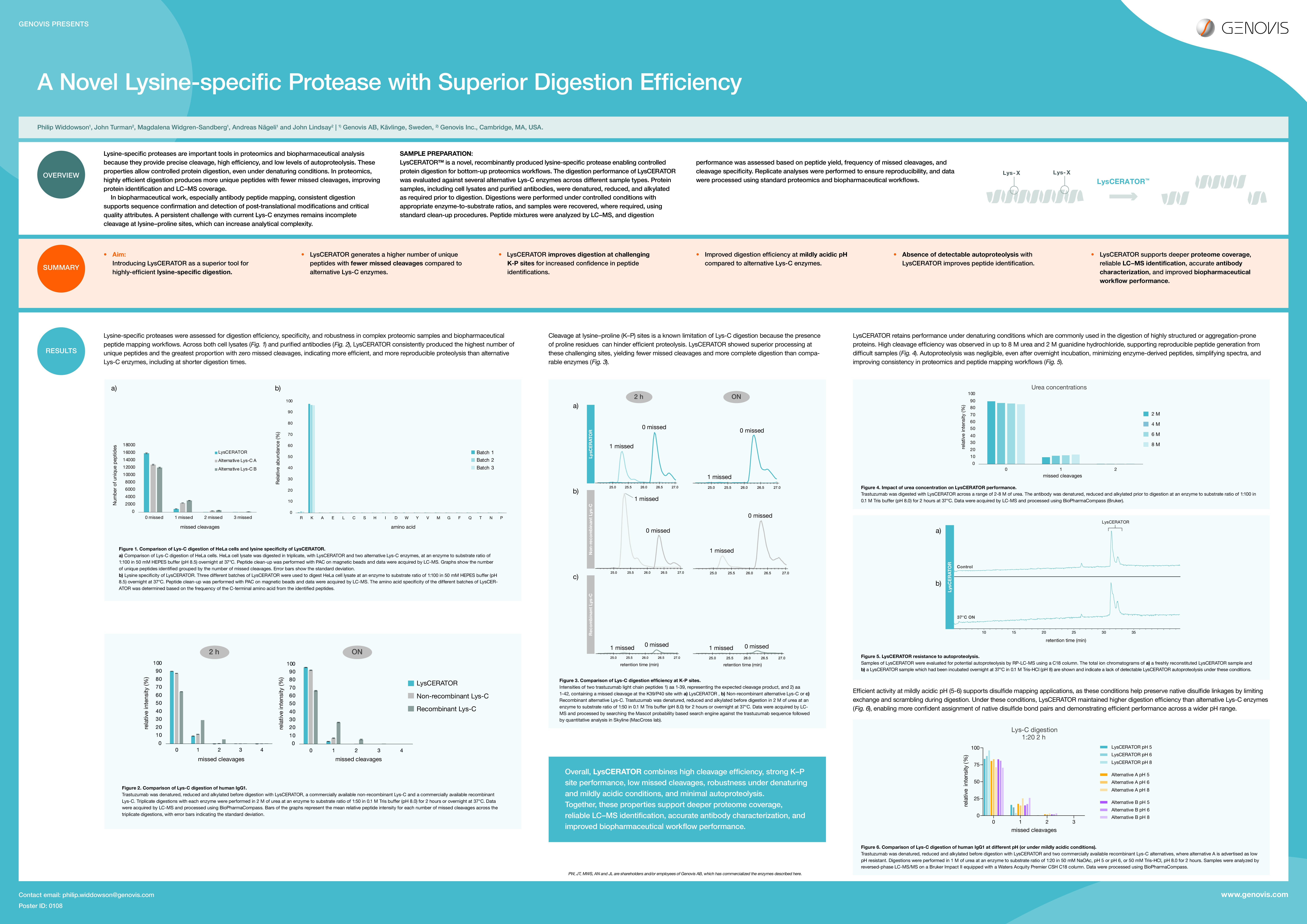
Cleavage at lysine residues followed by proline (K–P sites) is a well-established challenge for Lys-C digestion, often leading to missed cleavages due to proline-induced conformational constraints. To assess how effectively LysCERATOR overcomes this limitation, its performance at K–P sites was evaluated in detail and compared with two alternative, commercially available Lys-C enzymes – one non-recombinant and one recombinant.
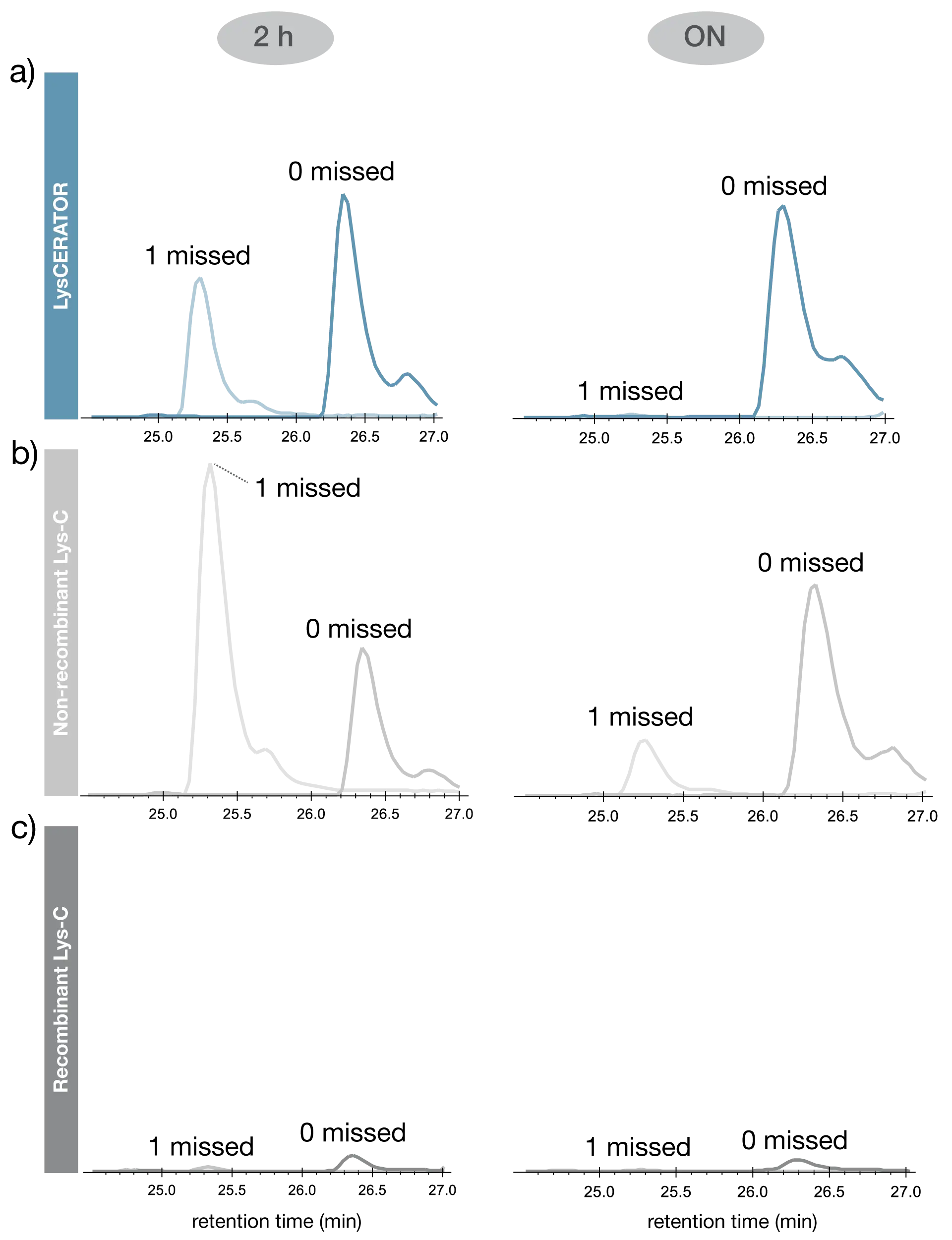
Digestion efficiency was assessed using trastuzumab. The figure shows the relative intensities of two peptides derived from the light chain N-terminus: LC aa 1–39, representing the expected cleavage, and LC aa 1–42, which contains a missed cleavage at the K39/P40 site. After 2 hours of digestion with LysCERATOR, the fully cleaved peptide (LC aa 1–39) was the more abundant species, while digestion with the non-recombinant alternative Lys-C predominantly produced the miscleaved peptide (LC aa 1–42).
Improved digestion performance at challenging K-P sites compared to other Lys-Cs
Following overnight digestion with LysCERATOR, there was a near-complete digestion at the K-P site while, in contrast, a substantial amount of the miscleaved peptide remained after digestion with the nonrecombinant alternative Lys-C. Digestion with the recombinant alternative Lys-C resulted in low overall signal intensity for both peptides, with the most prominent species being a peptide containing two missed cleavages (LC aa 1–45 – not shown).
Fewer missed cleavages resulting in more complete digestion
Collectively, these results demonstrate that LysCERATOR exhibits superior digestion efficiency at challenging K–P sites compared with alternative Lys-C enzymes, resulting in fewer missed cleavages and more complete proteolytic processing.
Increased confidence in peptide identifications
Related Products
Resources
LysCERATOR™
Download Product Folder

GingisREX™ for Specific Digestion at Arginine Residues
Download Scientific Poster

LysCERATOR™ for Superior Lysine-specific Digestion
Download Scientific Poster