Collaboration Agreement
Genovis and ArcticZymes are excited to announce a collaboration to speed up penetration and growth in the Chinese market.

Welcome to our blog! This is where we share a bit more – insights, updates, and thoughts from Genovis. Take a look around and see what you find.
Search post
Category
Genovis and ArcticZymes are excited to announce a collaboration to speed up penetration and growth in the Chinese market.
Today, Genovis has acquired the patent rights to a unique DNA polymerase developed by researchers at Uppsala University. The enzyme has potential applications in research, diagnostics and forensics.

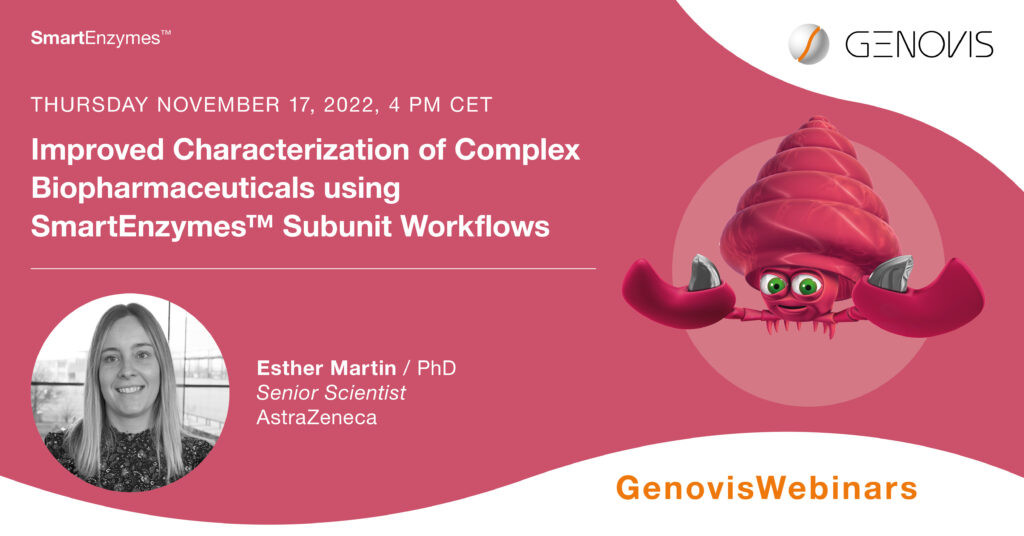
We are excited to announce the speaker and topic for our next GenovisWebinar!

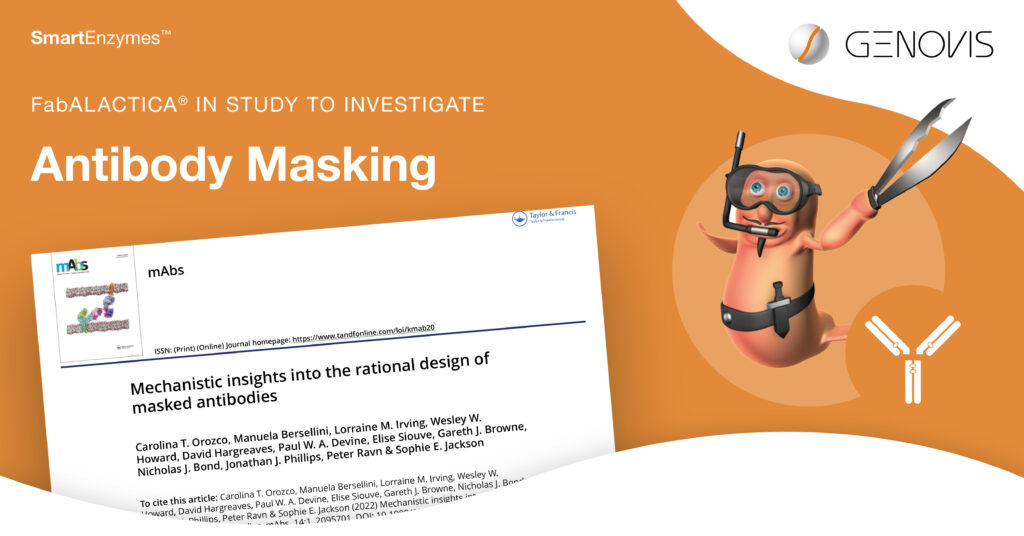
Scientists at the University of Cambridge, Astra Zeneca and collaborators undertook mechanistic studies to investigate antibody masking and better understand the parameters involved and their relative impact. FabALACTICA proved to be a valuable tool in this study, allowing the authors to generate antibody subunits. Using the Fab region, as opposed to the full-length antibody, allowed…
GlySERIAS is a unique enzyme that digests flexible glycine-rich fusion protein linkers such as Gly4Ser and GlyxSery (GS), and polyglycine (G) linkers. Today, we're happy and proud to be launching this unique SmartEnzyme in a new format - GlySERIAS Immobilized - for digestion of flexible linkers in easy-to-use spin columns! The enzyme enables separation…

As part of our overall strategy to become even more sustainable and caring for the environment, we are updating our product boxes (see below). When updating the boxes, we also want to make it easier for you to know what you get when you buy or search for a product from us. We are therefore…

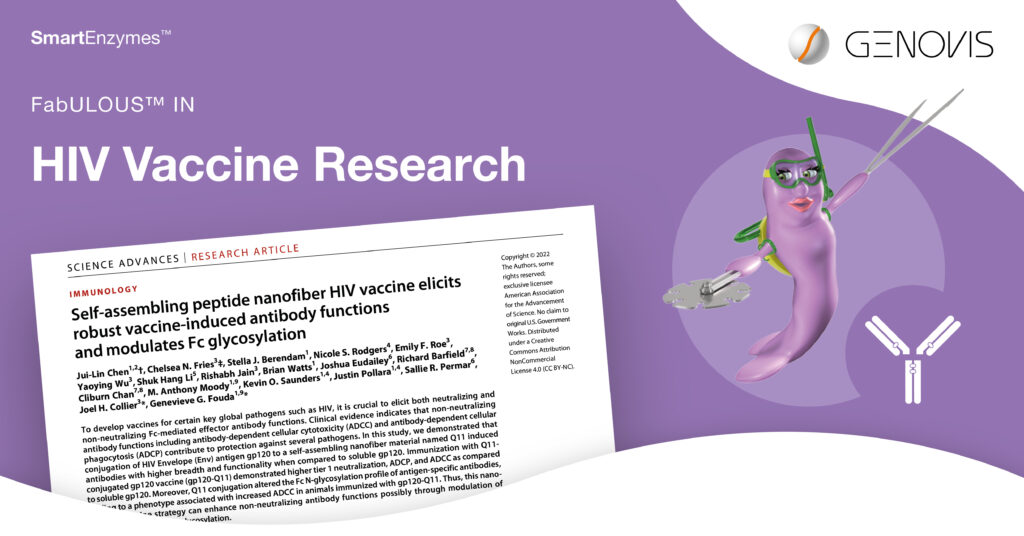
The Fc N-glycosylation profile can be linked to non-neutralizing functions in a vaccine. In a recent study by Chen et al., FabULOUS digestion provided valuable insights in HIV vaccine research following N-glycosylation analysis of the Fc region in mouse antibodies.
We are excited to announce our series of GenovisWebinars, and we are happy to invite you to the first webinar held on November 17th! Each webinar will showcase inspirational SmartEnzymes user, and the topics discussed are influenced by how to improve analytical workflows. Please join us in sharing experiences!
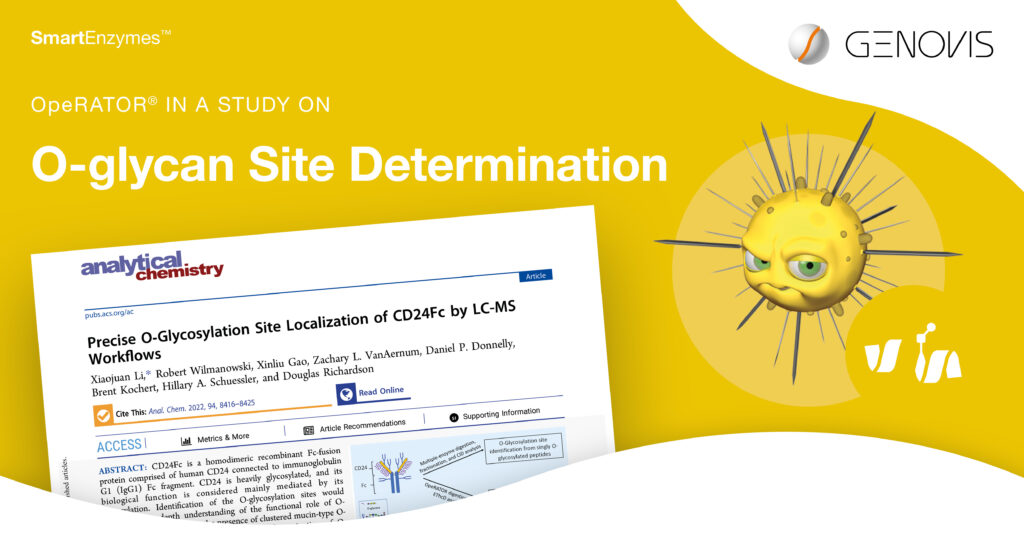
Scientists from Merck & Co. and Glycotope describe the localization of 12 O-glycosylation sites in the heavily O-glycosylated fusion protein CD24Fc by digestion with the O-glycoprotease OpeRATOR in combination with LC-MS analysis. Two different workflows were developed, one based on fractionation in combination with LC-MS/MS CID and one based on LC-MS/MS EThcD. OpeRATOR digestion enabled…
We offer fast and accurate LC-MS profiling of human IgG using unique sample preparation based on SmartEnzymes workflows. Our SmartEnzymes enable middle-level LC-MS analysis of antibodies to characterize critical quality attributes such as the glycosylation profile and mass confirmation.

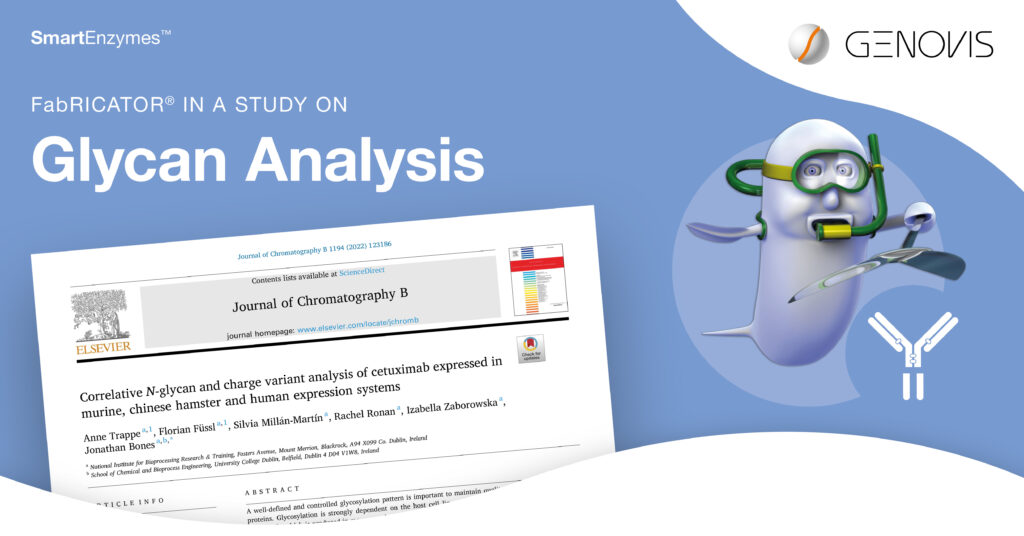
A strategy for comparative characterization of cetuximab produced in a variety of expression cell lines is described in this paper from scientists at the National Institute for Bioprocessing Research and Training (NIBRT) in Dublin, Ireland. FabRICATOR (IdeS) is a critical tool in this study, allowing for site-specific glycan analysis to be performed following antibody digestion…
Every autumn, the Royal Swedish Academy of Sciences announces the winners of the prestigious Nobel Prize. This year’s Chemistry Prize goes to Carolyn Bertozzi, Barry Sharpless and Morten Meldal for the development of click chemistry and bioorthogonal chemistry. Click chemistry is a fundamental part of our GlyCLICK technology. By combining Fc glycan remodeling and the…
