Articles in the Category ”Products”
Antibody Mixtures Digested using GingisREX
The formulation of antibodies in mixtures has revealed significant clinical advantages but causes increased analytical challenges. Long-term studies of formulated antibody mixtures over time are both difficult and time consuming. An example of a post-translational modification that could occur during storage is the oxidation of tyrosine that may induce conformational changes of an antibody. Read more »
SmartEnzymes in de novo Sequencing of Antibodies
Two complementary determining regions (CDR3) are considered major determinants of antigen-binding specificity that give rise to the human immunoglobulin repertoire with billions of unique antibodies. For de novo sequencing of the human repertoire, circulating antibodies can be analyzed by mass spectrometry after proteolytic cleavage. Complex mixtures such as plasma derived samples are however challenging to analyze due to the increased complexity that may prevent accurate assignments. Read more »
FabRICATOR in Efficient Structural Characterization of mAbs
In contrast to small generic molecules, therapuetic monoclonal antibodies (mAbs) exhibit inherent heterogeneity that may arise during production and formulation or due to the storage conditions. Therefore, it is essential to characterize the structural heterogeneity of mAbs with respect to properties including conformational changes, aggregation and post-translational modifications. In this work, Zhu et al. at the Chinese Academy of Medical Sciences & Peking Union Medical College present an integration strategy for structural characterization of mAbs by combining intact mass and middle-down analysis using only a high-resolution Q-TOF mass spectrometer. Read more »
The Crystal Structure of OpeRATOR Reveals O-glycan Substrate Specificity
The O-glycoprotease OpeRATOR® from Genovis has spurred great interest from the community and has become a valuable tool for characterizing O-glycosylated biopharmaceuticals. Through a collaboration with the lab of Marcelo Guerin, the structure of OpeRATOR has now been solved and published in Nature Communications. Read more »
GlyCLICK® and Middle-up LC-MS Enables Robust ADC Development
Scientists at the University of Geneva and CNRS present site-specific ADCs generated using the GlyCLICK technology and an analytical middle-up LC-HRMS workflow as a potential core module for ADC development.
Antibody-drug conjugates (ADCs) are efficient therapeutic agents that possess the cell-targeting properties of monoclonal antibodies combined with the potency of cytotoxic drugs. Early generation ADCs were predominantly obtained through non-selective conjugation methods by incorporation of a drug payload at randomly distributed sites. Such methods result in highly heterogenous subpopulations of varying antibody-drug ratio (DAR) leading to potential loss of efficacy and impaired pharmacokinetics. While alternative strategies exploring genetic engineering have emerged for conjugation at non-natural amino acids, challenges related to both production and analytical characterization persist.
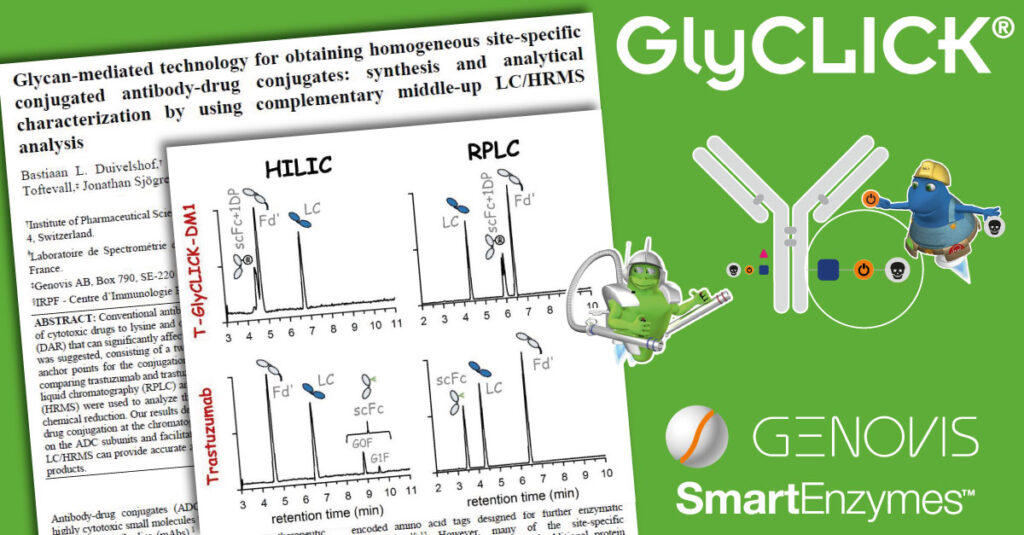
Glycan-mediated bioconjugation using the GlyCLICK technology is an attractive option to overcome the challenges of conventional bioconjugation without the need for genetic engineering to produce custom ADCs. By utilizing a unique combination of enzymes, the conserved Fc-glycans are remodeled and site-specifically conjugated using click chemistry for ADCs carrying two payloads per antibody (DAR=2.0) having controlled drug stoichiometry and preserved immunoreactivity. In this paper, Duivelshof et al. developed a site-specific ADC by coupling trastuzumab to DM1 using the GlyCLICK technology and evaluated the quality of the conjugation process using complementary reversed phase (RPLC) and hydrophilic interaction chromatography (HILIC) coupled to high-resolution mass spectrometry (HRMS).
The trastuzumab antibody was site-specifically conjugated to DBCO-functionalized DM1 (DBCO-PEG4-Ahx-DM1) using the GlyCLICK technology. To reduce sample complexity, the antibodies were digested with FabRICATOR® (Ides) or FabALACTICA® (IgdE) and reduced for comparison of native and GlyCLICK conjugated trastuzumab at the subunit level. The complementary HILIC and RPLC workflow allowed the authors to observe the significant shift in retention between the lipophilic drug payloads on the ADC and the hydrophilic N-glycans on native trastuzumab. These results enabled the scientists to confirm site-specific conjugation at the Fc-glycans sites, while hyphenation to HRMS detection allowed accurate determination of a DAR of 2.0 for GlyCLICK conjugated trastuzumab, which was not possible at the intact ADC level.
“Most ADCs are produced with non-selective bioconjugation of drug payloads to lysine or cysteine residues creating a wide variety of drug-antibody ratios (DAR). In the frame of new ADC product development, we believe that having control over the DAR and drug load distribution (DLD) is of crucial importance, as is the ability to accurately monitor these two CQAs. Therefore, the combination of the GlyCLICK technology to create homogeneous site-specific ADCs with the middle-up LC/HRMS approach to rapidly determine both the DLD and DAR has a great potential for ADC development.”
Investigating IgG Delivery Across the Blood-Brain Barrier with GlycINATOR®
Scientists from the University of Delaware demonstrate the use of GlycINATOR for studying transcytosis of IgG in an in vitro model of the blood-brain barrier.
Brain endothelial cells (BECs) are important structural components of the blood-brain barrier with a unique physiology that restricts permeability of blood-borne molecules such as therapeutic antibodies to the brain. The neonatal fragment crystalline receptor (FcRn) is known to mediate IgG recycling and transcytosis in peripheral epithelium, but the role of FcRn in transcytosis of antibodies in BECs remains uncertain.
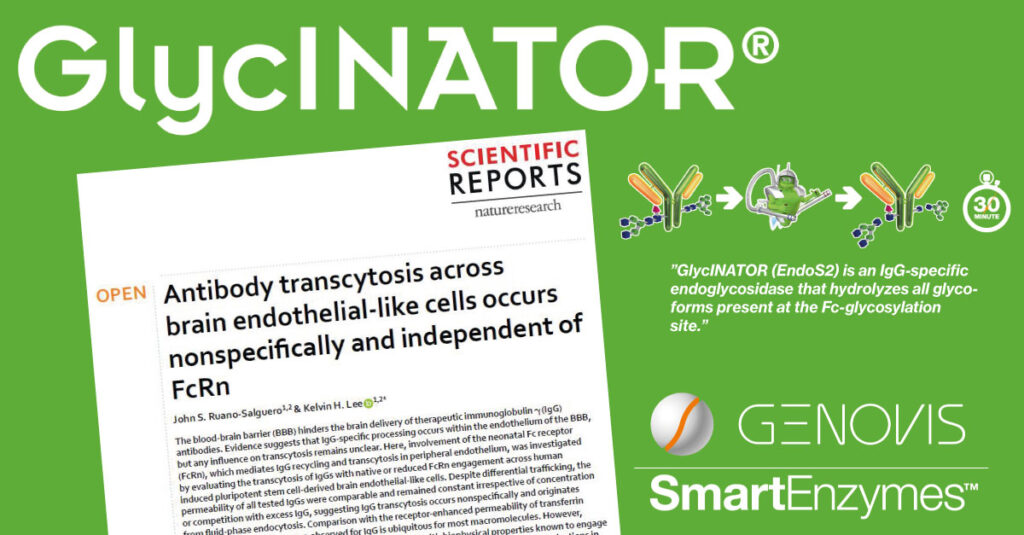
In this paper, Ruano-Salguero and Lee study the role of FcRn in transcytosis of IgG across the blood-brain barrier in BEC-like cells (iBECs) derived from induced human pluripotent stem cells. Using microscopy-based methods, different antibody species and subunits were compared to investigate the role of FcRn on transcytosis of IgG. To specifically determine the impact of Fc-glycosylation on permeability, all glycoforms on human IgG1 was removed using the GlycINATOR enzyme and the deglycosylated antibodies analyzed in iBECs using live-cell microscopy. Finally, the authors also investigated the impact of biophysical properties such as charge and size on transcytosis mechanisms.
Using the in vitro blood-brain barrier model, the scientists found that FcRn mediates both recycling and reduced lysosomal accumulation of IgG in iBECs. Transcytosis of antibodies across the in vitro blood-brain barrier exhibited non receptor-medicated mechanisms that were unaffected by human FcRn-binding motifs and Fc-glycoforms as demonstrated by the different species and deglycosylated human IgG1. Investigations of intracellular trafficking by FcRn binding or other IgG-specific mechanisms were further observed to be non-saturable, indicating fluid-phase permeability. Interestingly, the authors found that biophysical changes enhanced permeability of molecules with positively charged isoelectric points. These results highlight the potential for use of in vitro models as well as characterization and modification of biophysical properties to improve therapeutic delivery to the brain.
Deglycosylation of IgG using the GlycINATOR enzyme decreases binding to Fc-receptors (FcRs) enabling bifunctional assays to study glycan-mediated interactions such as ADCC activity. The binding to FcRn is however preserved with GlycINATOR, allowing recycling and increased circulation in vivo of deglycosylated IgG and GlyCLICK conjugated ADCs.
SmartEnzymes Poster Highlights 2019
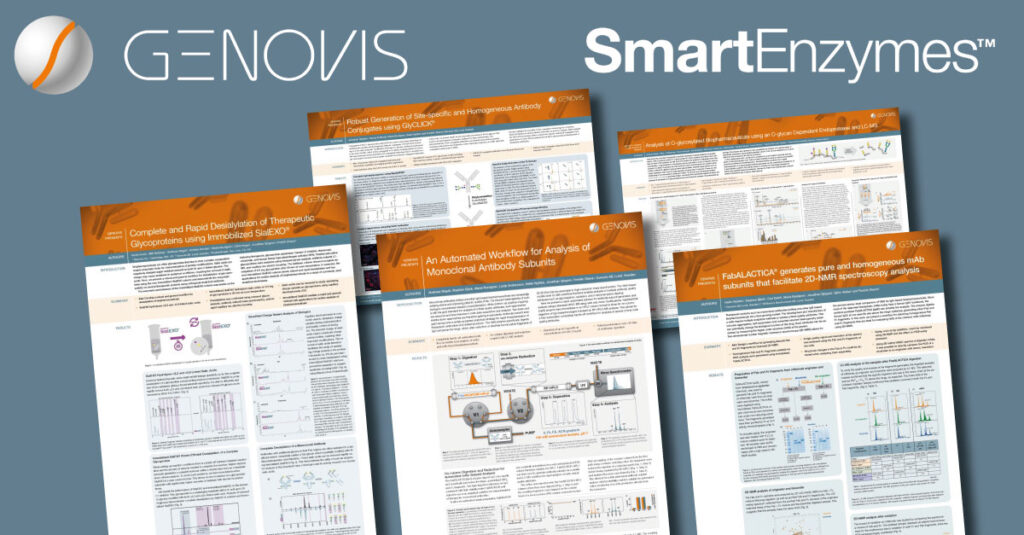
Which are the top five poster from Genovis in 2019? We have selected the posters that are both popular with our website visitors and that describe the most exciting new applications using SmartEnzymes. Click on the images to download the full posters.
1 – Analysis of O-glycosylated-Biopharmaceuticals using an O-glycan Dependent Endoprotease and LC-MS (ASMS, 2019)
In this collaborative work, we set out to combine our novel, specific enzymes with the latest LC-MS technologies from Thermo Fisher Scientific in order to improve and simplify analytical workflows for biotherapeutics. We demonstrate in-depth characterization of O-glycosylated biopharmaceuticals and quantitative comparison of O-glycosylation patterns. We also present a workflow for total deglycosylation of heavily glycosylated biopharmaceuticals, allowing for intact mass spectrometry analysis without interference from glycan heterogeneity.
2 – Robust Generation of Site-specific and Homogeneous Antibody Conjugates using GlyCLICK® (World ADC, 2019)
In this work, we present details on the enzymatic processing of the Fc-glycans that result in the homogenous conjugates, and confirmed it by mass spectrometry. The immunoreactivity of the conjugated antibodies was studied using surface plasmon resonance and toxicity by a dose-dependent response of a DM1 GlyCLICK conjugated trastuzumab (T-DM1).
3 – An Automated Workflow for Analysis of Monoclonal Antibody Subunits (CASSS AT 2019)
Here we present a rapid, automated solution for antibody subunit generation and analysis using a standard HPLC-MS setup with only minor modifications. FabRICATOR® (IdeS) enzyme was immobilized in an HPLC column format to allow for easy on-column digestion of IgG-based biologics followed by RP-HPLC-MS analysis. This facilitates a fully automated, completely hands-off workflow for analysis of several critical quality attributes.
4 – FabALACTICA® Generates Pure and Homogenous mAb Subunits that Facilitate 2D-NMR Spectroscopy Analysis (Festival of Biologics, 2019)
Two-dimensional nuclear magnetic resonance spectroscopy (2D-NMR) allows for the precise atomic-level comparison of higher order structure (HOS) for IgG-based biopharmaceuticals. Since most of the approved therapeutic mAbs today have a human IgG1 backbone, the cysteine protease FabALACTICA (IgdE) can simplify the analysis. The enzyme digests human IgG1 at a specific site above the hinge, generating intact Fab and Fc fragments. In this work, we present a workflow for obtaining homogeneous Fab and Fc fragments that are ideal for evaluating HOS of the chimeric mAb infliximab using 2D-NMR.
5 – Complete and Rapid Desialylation of Therapeutic Glycoproteins using Immobilized SialEXO® (AET 2019)
The enzymatic performance of the Immobilized SialEXO column was tested on therapeutic glycoprotein substrates: human C1 inhibitor, etanercept, cetuximab, and human tissue-type plasminogen activator (tPA). Treated and native glycoproteins were then analyzed using released glycan analysis, antibody subunit LC-MS, and capillary iso-electric focusing. The sialidase column delivered complete de-sialylation of 0.5 mg glycoprotein after 30 min at room temperature. In summary, the new Immobilized SialEXO column provides robust and rapid desialylation ideal for routine analysis of biopharmaceuticals with a range of commonly used analytical techniques
SmartEnzymes™ in Quality Control of Commercial Antibodies
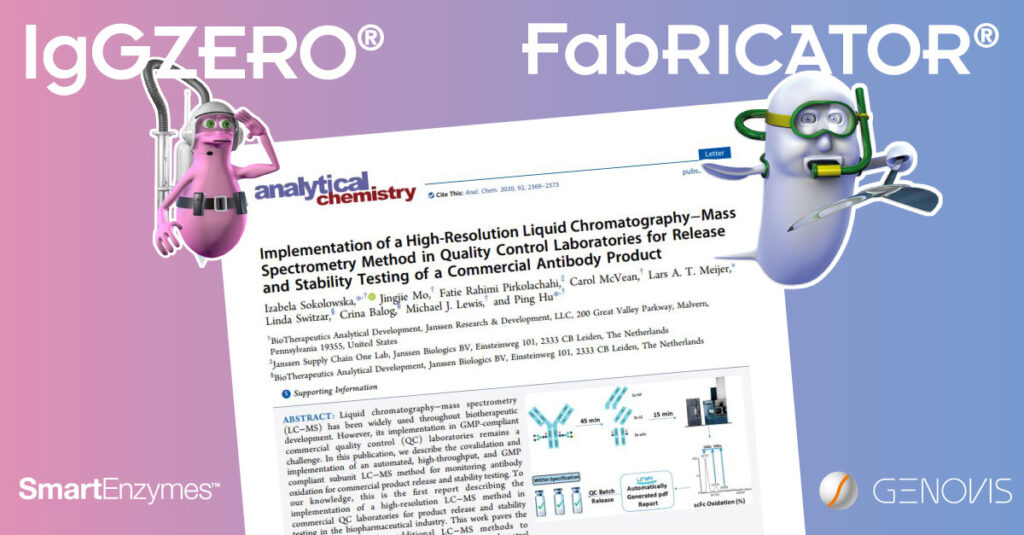
In a recent paper, Sokolowska and colleagues at Janssen Research and Development qualified and covalidated a subunit LC-MS method for quality control and stability testing of the oxidation status of commercial antibodies.
LC-MS is commonly used for therapeutic antibody development and characterization within the biopharmaceutical industry due to the inherent strengths to provide site-specific identification and quantitation of post-translational modifications. However, the implementation of LC-MS methods to commercial QC labs is challenging, since there are not many options for fully GMP compliant systems. In addition, the methods often require extensive MS expertise and suffer from time-consuming sample preparation and lack of robustness. To counter these obstacles, Sokolowska et al. have developed an LC-MS method that requires minimum analyst training. It uses validated GMP compliant software and is based on subunit analysis, which is proved to be faster and more robust compared to peptide mapping.
The assay uses FabRICATOR® (IdeS) and IgGZERO® (EndoS) enzymes to generate deglycosylated IgG subunits suitable for MS analysis. FabRICATOR digests the antibody below the hinge and IgGZERO hydrolyzes the Fc N-glycans. The subunits are analyzed using reversed phase-ultraperformance liquid chromatography coupled to a quadrupole time-of-flight (RP-UPLC-QTOF) MS to monitor antibody oxidation for stability testing and commercial product release.
The developed subunit LC-MS assay was covalidated in three laboratories and showed comparable performance. The robustness was tested by varying both the LC-MS settings and the sample preparation. The enzymatic conditions included variations in protein concentration, enzyme lots, enzyme-to-protein ratio, digestion time and temperature, reduction time and temperature, and reagent concentrations. Minor variations in sample preparation all led to measured Fc oxidation within the method variation +/- 0.9%.

Figure 1. mAb subunit oxidation assay using FabRICATOR and IgGZERO (Sokolowska et al., 2020.)
The approval of this method opens the door for implementing other subunit LC-MS and multiattribute methods in QC laboratories to modernize commercial QC and stability testing.
Learn more by reading the full paper, follow the link below.
https://pubs.acs.org/doi/full/10.1021/acs.analchem.9b05036
Characterizing ADCs using FabRICATOR and middle-down MS
The process of characterizing an antibody drug conjugate (ADC) requires the evaluation of critical quality attributes including primary sequence analysis and drug conjugation assessment. Addressing glycoprofile determination as well as drug load distribution and drug-to-antibody ratio (DAR) is however challenging using peptide mapping. In addition, further challenges arise from the increased hydrophobicity of the ADC and the risk of drug-linker dissociation in an MS/MS experiment.
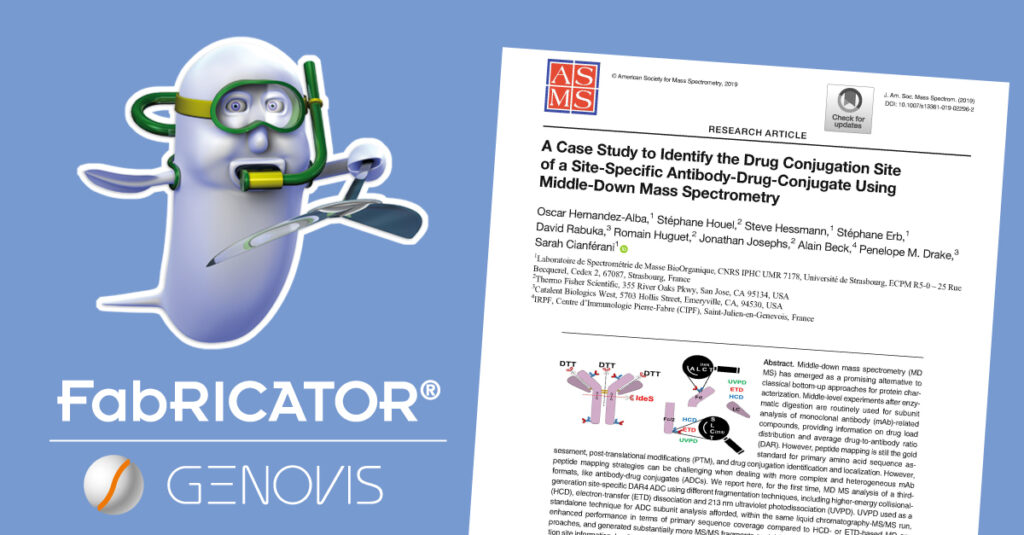
In an article by Hernandez-Alba et al. (2019) the authors characterized a site-specific ADC using middle-down MS. They combined three different fragmentation strategies for improved sequence coverage and drug conjugation assessment. The site-specific ADC (DAR=4) was digested using FabRICATOR and reduced to generate homogenous Fc/2, Fd’ and LC fragments for analysis by multiple ion activation techniques. By combining MS/MS data obtained with HDC (hydrodynamic chromatography), ETD (electron-transfer dissociation) and UVPD (ultraviolet photodissociation) fragmentation modes, the scientists obtained valuable information with the advantages of minimal sample preparation and analysis time using middle-down MS.
The UVPD mode showed better performance compared to ETD and HDC. This indicated that the performance of this activation technique was unaffected by the hydrophobicity of the ADC. The complementarity between UVPD and ETD was further highlighted for drug conjugation assessment by allowing primary sequence validation and accurate identification of drug conjugation and glycosylation sites. These results highlight the potential of middle-down MS as a complement in next-generation strategies for the characterization of mAb-based compounds including ADCs.
Read more about FabRICATOR and Applications of FabRICATOR.
Improved antibody-PET tracers for in vivo imaging with GlyCLICK®
Radioactively labelled antibodies are excellent immuno-PET tracers for evaluating in vivo distribution and performance of therapuetic agents. Site-specific conjugation at the antibody Fc glycan site by enzymatic remodeling allows for a uniform label distribution of such PET-tracers, compared to conjugates generated with conventional random labelling strategies.
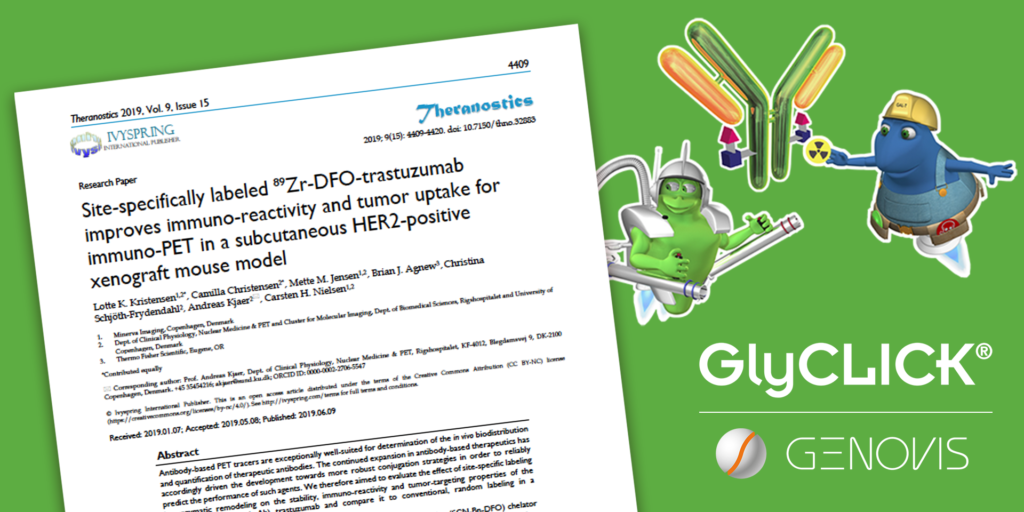
In an article by Kristensen et al. (2019), the authors evaluated the stability, immunoreactivity and in vivo biodistribution of the radioactively labelled mAb Trastuzumab (Herceptin). Using GlyCLICK, the antibody was enzymatically modified with GlycINATOR (EndoS2) and conjugated with a DIBO-DFO chelator prior to 89Zr radioactive labelling. Comparing the GlyCLICK technology with ß-galactosidase remodelled conjugates and two random labelling techniques, the authors obtained valuable data on the overall performance of the various PET-tracers.
Antibodies subjected to site-specific labelling showed significantly increased in vitro stability and immunoreactivity compared to randomly labeled Trastzumab. Furthermore, using in vivo immuno-PET imaging, these conjugates also displayed superior tumor-targeting properties based on the successful detection of HER2-positive tumors in mouse models. These results highlight the advantages of site-specific antibody conjugation.
For more information on GlyCLICK please visit