
A New Standard in Lys-C Digestion: Introducing LysCERATOR™
Efficient Lys-C digestion is critical for reliable protein identification in modern proteomics workflows. Missed cleavages, incomplete protein digestion, and challenging sample types can quickly reduce confidence in downstream LC–MS analysis. To address these challenges, Genovis has launched LysCERATOR™, a new Lys-C enzyme for efficient, lysine-specific protein digestion — even under demanding conditions.
Read more »

Benchmarking Study Establishes SEQURNA® as a Superior, DTT-Free, RNase Inhibitor for High-Sensitivity Single-cell RNA-seq
A new preprint from the creators of FLASH-seq demonstrates that replacing protein-based RNase inhibitors with the synthetic, thermostable SEQURNA significantly improves sensitivity, especially in low-RNA cells, while enabling a fully DTT-free workflow.
Read more »

SEQblock™: Smarter Temperature Control for Reliable Results
In molecular biology, temperature control is one of those quiet essentials that makes all the difference. From snap-freezing delicate RNA to gently warming enzyme reactions, the right temperature brings consistency to every result.
Thermoconductive modules have anchored molecular biology labs for years, replacing ice buckets and uneven heat blocks with stable, uniform temperature control. But as today’s assays and automated workflows grow more sensitive, precision in temperature has never mattered more. That’s where SEQblock comes in — designed to make research more consistent, efficient, and sustainable.
Read more »

Tackling Rheumatoid Factor Interference in ADA Assays using IgMBRAZOR™
Researchers at Roche have recently described an elegant solution to address the persistent problem of rheumatoid interference (RF) in anti-drug antibody (ADA) immunoassays. IgMBRAZOR is a unique IgM-specific protease that digests human IgM at one specific site below the CH2 domain in the heavy chain, generating homogeneous F(ab’)2 and Fc fragments. By introducing IgMBRAZOR pretreatment into their experimental setup, the scientists looked to digest IgM antibodies, including those responsible for RF interference, and effectively remove them from serum samples before ADA testing.
Read more »
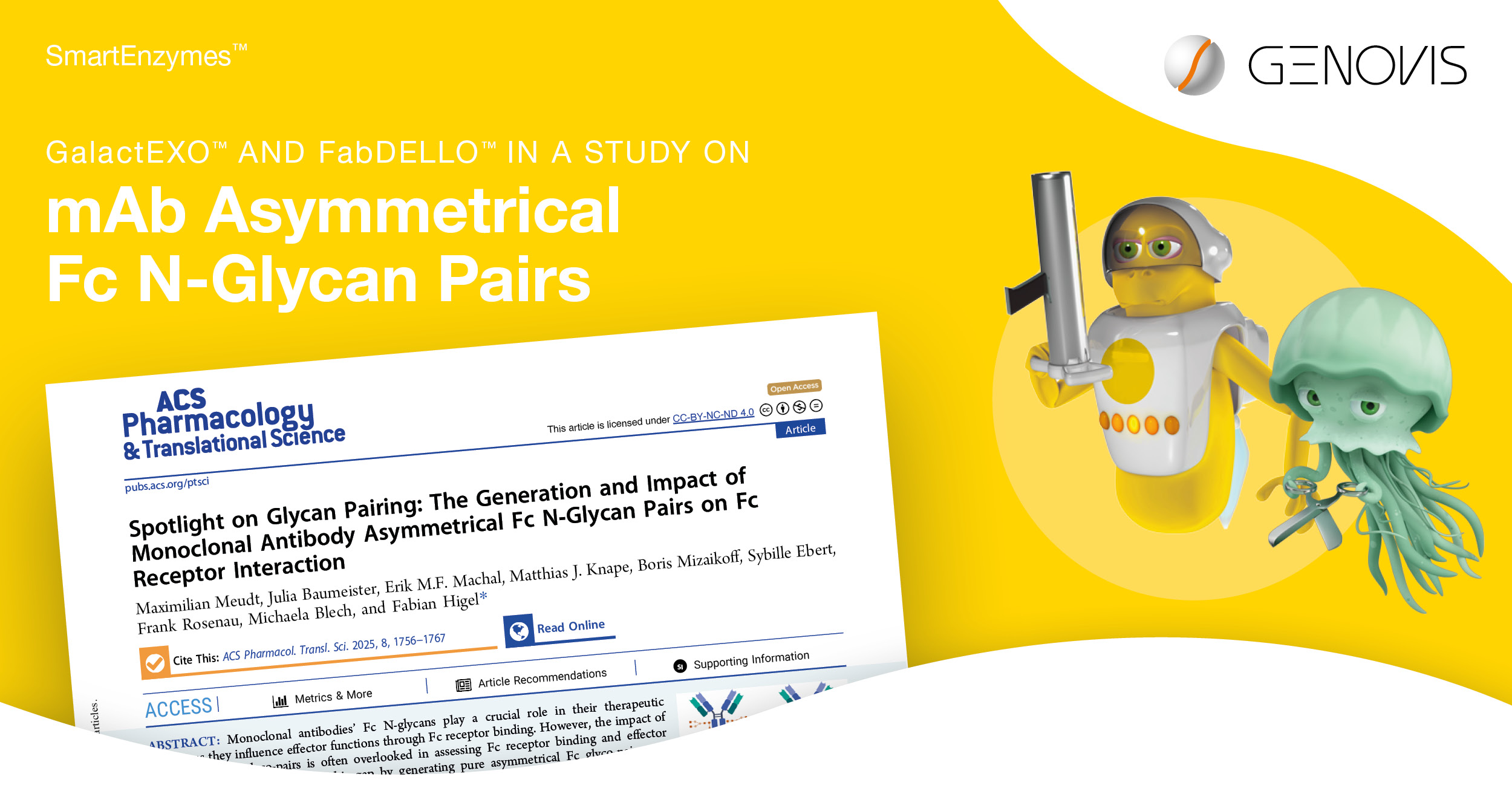
Understanding the Functional Impact of Monoclonal Antibody Asymmetrical Fc N-Glycan Pairs using SmartEnzymes™
Scientists at Boehringer Ingelheim and collaborators have developed a novel method to generate antibodies with defined asymmetrical Fc glycoforms and evaluate their Fc receptor (FcγRs) binding properties. Combining enzymatic digestion and redox-mediated Fc recombination, Fc fragments with specific glycan pairings could be generated and their Fc receptor binding analyzed by surface plasmon resonance (SPR) spectroscopy.
Read more »

Why It’s Time to Replace Your Protein-based RNase Inhibitor
Preserving RNA integrity is essential in molecular biology workflows, and RNase inhibitors are a critical part of that process. But if you’re still relying on a traditional protein-based recombinant inhibitor, it could be costing you more than you think – in both performance and budget. Here’s why it’s time to switch to a smarter alternative:
Read more »

FabRICATOR® Xtra LALA for Ultrafast Microdroplet Digestion of Antibodies with Fc-silencing Mutations
Scientists at New Jersey Institute of Technology, Johnson & Johnson and collaborators have demonstrated a novel approach for mass spectrometry (MS)-based characterization of hinge-mutated antibodies. Combining the recently introduced FabRICATOR Xtra LALA enzyme with ultrafast microdroplet digestion allows for fully automated, high-throughput and efficient antibody characterization, with the entire sample preparation and MS analysis completed in around 1 minute per sample!
Read more »

Evaluating the Impact of Antibody Fragments on Aggregation using FabALACTICA®
Scientists at Biogen have developed an approach to better understand monoclonal antibody (mAb) aggregation by characterizing fragments that may form during the production process. Fab/c fragments – common impurities generated through hinge digestion and loss of a Fab subunit – can offer valuable insights into aggregation mechanisms. To support this work, FabALACTICA, which specifically digests human IgG1 above the hinge, was used to generate structurally relevant Fab/c fragments. Its ability to produce consistent and defined mAb fragments makes FabALACTICA a powerful tool for studying mAb aggregation through this approach.
Read more »

Multi-Attribute mAb Variant Characterization with CE-MS and FabRICATOR® Digestion
Scientists at Aalen University and their collaborator present a detailed methodology for the rapid and thorough characterization of monoclonal antibody (mAb) variants using capillary electrophoresis-mass spectrometry (CE-MS) at the subunit level. mAbs are an important class of therapeutic molecules for treating various diseases, including cancer and autoimmune disorders. mAbs are large, complex molecules and can undergo a range of post-translational modifications (PTMs), which may affect their biological activity, stability, and therapeutic efficacy. Comprehensive characterization of these modifications is crucial to ensuring the safety and quality of therapeutic mAbs.
Read more »

GlyCLICK®-generated ADC Suppresses Tumor Growth in Pancreatic Cancer Models
Scientists at The Finsen Laboratory and collaborators have described the potential for a novel antibody-drug conjugate (ADC) to treat pancreatic ductal adenocarcinoma (PDAC). The ADC candidate is conjugated with a highly potent anthracycline payload (PNU-159682) using GlyCLICK conjugation technology, and targets uPAR (urokinase plasminogen activator receptor), a protein overexpressed in PDAC and its surrounding stroma. GlyCLICK facilitated the site-specific attachment of the payload to the antibody’s Fc-glycans, ensuring a precise drug-to-antibody ratio (DAR) of 2. This study highlights how GlyCLICK’s precision and efficiency significantly enhanced the development, efficacy, and safety of the ADC molecule.
Read more »